New Puppy Crying at Night: The Two-Week School-Night Plan
A new puppy crying at 2am is doing what a new puppy does, and the fix is scheduling, not willpower. Four decisions carry it: pick the arrival week deliberately (never the week school starts), write the night shift rota before the first night, park the crate where the barking reaches the adults and not the youngest kid, and hold the household’s morning clock no matter how the night went. Settling in is measured in weeks, not nights: plan for a rough fortnight and you get a fortnight instead of a rough autumn.
Bring the dog home on the right week
This is the one lever you get before anything starts, and most families spend it badly — the dog arrives the same weekend as school pictures, because that is when the litter was ready. Rank the candidate weeks against what is already on the calendar:
| Arrival window | Why it works (or doesn’t) |
|---|---|
| Friday of a three-day weekend | Best. Two recovery nights before anyone owes an alarm clock. |
| An ordinary Friday | Workable. One free morning, then straight into a school week. |
| Mid-week | Hard. Night one lands on a school night, zero slack. |
| The week school starts | Avoid. Two adjustment curves stacked on one household. |
| A tournament or trip week | Avoid. Somebody has to be functional at 6am on a field. |
Then look further out: whatever sits in the next fortnight — conferences, a swim meet, a week where one adult travels — is what a sleep-deprived household absorbs.
The 2am shift rota, written before night one
Decide who gets up before anyone is standing in a dark kitchen at 2:07 negotiating it. Written down, on the fridge, like every other duty here.
- Two adults: alternate whole nights, not wake-ups. Trading within a night means you are both awake twice. One owns Monday, the other Tuesday. The off-duty adult wears earplugs and stays upstairs — that is a job, not a luxury.
- One adult: bank the recovery instead. You will take every night, so buy back the mornings — lunches packed at 8pm, clothes out, the whole school-night run-sheet pushed as early as it will go. A 2am wake costs double on an unprepped morning.
- Kids are not on the rota. A ten-year-old who begged for the dog can do the after-school walk. Overnights belong to adults.
- The 2am visit is deliberately boring. Same spot, no talking, no play, minimum light, straight back to the crate. A puppy who gets a party at 2am books another for tomorrow.
- Log it for a week. Just times, on a scrap by the coffee maker: 12:40, 2:55, 5:10. By day five you can see whether wakes are drifting later, which is the whole progress report.
Where the noise lands during the adjustment
Here a new dog differs from a settled one. Our family dog’s bedtime routine puts the crate somewhere interior and quiet, chosen for the dog’s own sound environment. For the first two weeks you want the opposite priority: the noise should reach you and nobody else.
So during adjustment, place the crate by three questions:
- Can the on-duty adult hear a whimper from bed? If so, you catch it before it becomes a bark that empties three bedrooms.
- Is it as far from the youngest kid’s door as the floor plan allows? In a two-storey house that usually means downstairs, at the opposite end from the stairs. In a ranch it might mean the primary bedroom itself for a fortnight.
- Is it out of sight of the front door and street-facing glass? Headlights and the 5:15 neighbour are a separate problem, not one to stack on this.
Then move it, a room at a time, once nights go quiet. The adjustment spot is temporary; the permanent one is chosen on the settled-dog criteria.
What actually shortens the settling-in
Not much, honestly — but a few things are worth doing on night one rather than night nine.
A warm den beats a big empty crate: a crate sized to the dog, covered on three sides, with a thick folded blanket. Warmth plus something that reads as a littermate is the classic first-nights answer, which is why the Snuggle Puppy heartbeat toy is the one thing I’d buy before pickup — a pulsing plush with a heat pack, made for exactly this fortnight. Some dogs ignore it; it’s ten minutes of setup against a two-week problem.
Two more, both scheduling: last outside trip as late as your own bedtime allows, and a genuinely tiring afternoon. The least-walked hour in a school-age house is the one after the bus, which makes the after-school landing the natural home for the real walk.
One caution: do not start restricting water on a schedule you read on a blog. Ask your vet what suits a puppy of that age and size — it is the one item where a general rule can be wrong for your animal.
The youngest sleeper pays for this, not you
The adult cost of a puppy fortnight is obvious. The one that surprises people is what it does to the smallest kid in the house, who has no stake in the dog’s adjustment and every stake in an unbroken night. Two things tend to happen. First, the 2am bark wakes a four-year-old who was sleeping fine, and now you’re making a call in the dark about whether to go in at all — a judgement worth understanding on its own terms, and Betteroo’s guide to when small children can settle themselves back down is a better framework than deciding it fresh each night at 2:10.
Second, later: after ten or twelve broken nights plus a new creature in the house, bedtime gets sticky — one more song, door open wider, calling down the stairs. That reads as separation anxiety showing up at bedtime rather than as anything about the dog, and it outlasts the puppy problem if you let it slide. Hold the wind-down you had.
 The puppy settles in a fortnight. The four-year-old might not.
Betteroo builds a personalized, day-by-day sleep plan for your baby or toddler — tonight's bedtime, tomorrow's nap call — so the smallest schedule in the house stops being the one that wobbles.
Take the 2-minute sleep quiz →
The puppy settles in a fortnight. The four-year-old might not.
Betteroo builds a personalized, day-by-day sleep plan for your baby or toddler — tonight's bedtime, tomorrow's nap call — so the smallest schedule in the house stops being the one that wobbles.
Take the 2-minute sleep quiz →
Mornings after a bad night still leave at 7:40
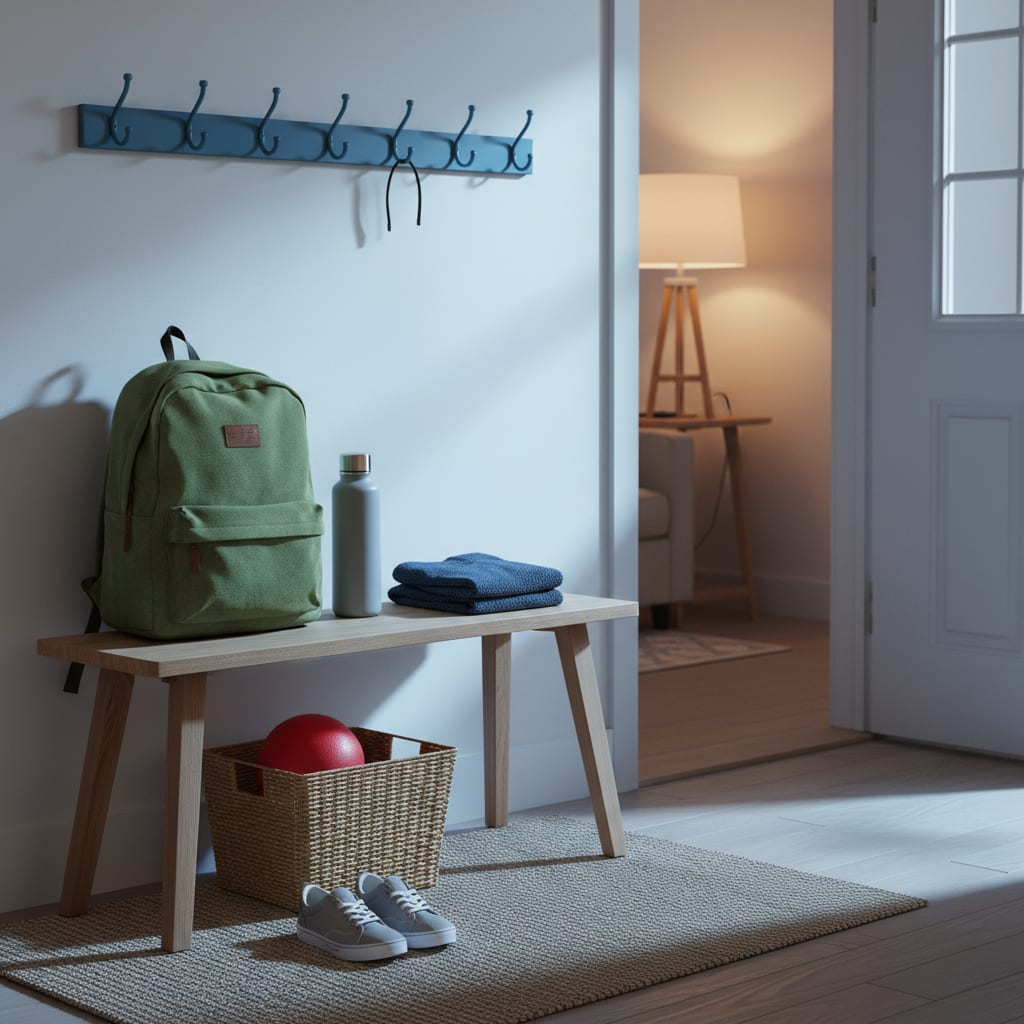
The temptation after a 2:55 wake is to let the morning slide, and that is how a two-week adjustment becomes a term of late departures. The school morning run-sheet doesn’t get renegotiated because the dog had a night. Wake times stay put; what moves is how much of tomorrow you did last night — bags on the hooks and shoes paired before the adults go up.
One rule survives the fortnight: the dog’s release time is set by your household’s start, not by the first bark. Coming down at 5:20 because he barked at 5:15 teaches him that barking produces the morning, and you’ll be undoing that in October.
When it isn’t adjustment any more
Settling in trends the right way: wakes get later, then fewer, then stop. If four to six weeks in you are still being called down at the same hour nightly, or the crying is frantic rather than fussy, or anything changed suddenly after a stretch of quiet, that is a conversation with your vet — to rule out pain or a medical cause first — and then a certified trainer or a veterinary behaviourist. A schedule fixes a scheduling problem. It does nothing for a distressed animal, and I run a calendar, not a clinic.
FAQ: new puppies, night waking and the school year
How long does a new puppy cry at night?
Plan for a couple of weeks of broken nights that improve gradually rather than stopping on a particular date — wakes drift later and get shorter before they disappear. Track the times so you judge the trend rather than how tired you feel. No improvement by four to six weeks is worth raising with your vet.
Should I put the puppy’s crate in my bedroom?
For the adjustment fortnight it is often the most practical choice, because you hear the early whimper before it becomes a bark that wakes the children. Treat it as temporary and move the crate outward once nights are quiet, choosing the permanent spot for the dog’s sound environment instead of yours.
How do I stop the puppy waking my toddler at 2am?
Distance and sequence. Put the crate as far from the youngest child’s door as the house allows, keep overnight visits short, dark and silent so nothing escalates, and do not change the child’s bedtime routine to accommodate the dog. Protest at lights-out is the routine to protect, not the dog’s.