A Family Screen-Time Contract That Sticks (Printable)

A screen time contract sticks when it does three things: it states windows, not minutes (screens live in fixed daily slots, so nobody’s litigating a meter); it names where devices sleep (a charging spot outside bedrooms, every night, adults’ phones included in spirit if not in letter); and it’s signed by everyone and posted where the arguments happen — which in our house means the command-center wall, at kid eye level. Write those three clauses on one page, sign it as a family, and you’ve converted a nightly judgment call into a calendar fact. Calendar facts don’t argue back.
Why contracts beat rules
We ran screen rules for two years. Rules live in the parent’s head, which means every enforcement is a fresh decision, every decision is appealable, and the appeals court is in session at 8:40 on a school night. A contract moves the policy out of your head and onto the wall. When the 10-year-old lobbies for one more episode, I don’t rule against her — I point, which is a different and much more survivable transaction. Front-office habit talking: the school never argued about dismissal procedures either. It laminated them.
The other thing writing it down does: it forces the adults to actually agree with each other first. Half of our screen chaos, honestly, was two parents enforcing two slightly different imaginary policies. The contract meeting — twenty minutes, one page, everyone present — is where that gets settled, and it’s worth scheduling into the Sunday calendar meeting the week you draft it.
What goes on the page
Keep it to one page. Ours has five sections:
| Clause | What it says |
|---|---|
| Windows | When screens are on the menu — school days vs. weekends, stated as clock times |
| Sleep location | The charging spot, and the time devices report to it |
| Off-limits zones | Meals, car rides under 20 minutes, and any room with a closed door |
| What counts | Homework research and video calls with grandparents don’t burn window time; everything else does |
| The renegotiation date | The whole thing gets revisited each season — sign-ups change, sunset changes, the contract follows |
The “what counts” clause matters more than it looks. Without it, every gray area (is Minecraft with the cousin a video call? no) becomes a floor debate. With it, gray areas get logged and settled at the renegotiation date, not at 7:55pm.
Our school-day window is after the after-school landing and before dinner; weekend windows are wider but still windows. Yours will differ — the contract’s power is that it’s yours, written down, not that it copies anyone’s times.
Where devices sleep (the load-bearing clause)
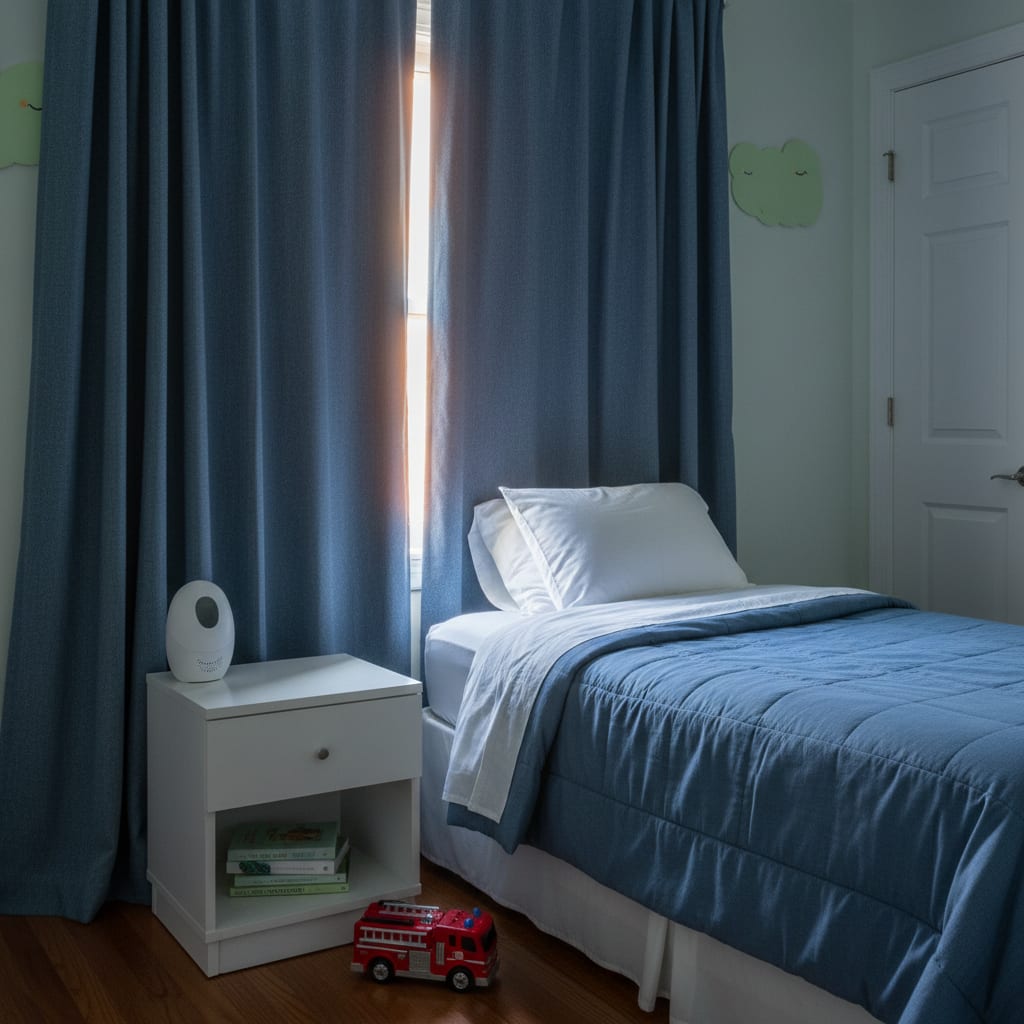
If you adopt only one clause, take this one: devices sleep in a charging spot that is not a bedroom, starting at a stated time. Ours is the kitchen counter at 7:15, which is the same moment the school-night routine calls screens-off — the two systems share a hinge on purpose. A tablet in a bedroom after lights-out isn’t a temptation, it’s a certainty; no ten-year-old alive out-disciplines a glowing rectangle six inches from her pillow, and I’ve stopped expecting mine to. The charging spot removes the contest entirely. It also gives you a nightly, glanceable audit: three devices on the counter, contract honored, done.
The toddler-and-preschooler footnote
One clause in our contract exists purely for the 4-year-old: no screens inside the hour before his wind-down. The big kids metabolize an episode and move on; the little one comes off a tablet like a man leaving a casino — lit up, cash poor, in no state for bed. And because his early bedtime is the domino the whole evening rests on, his screen cutoff is placed relative to his schedule, not the house’s. His bedtime and quiet-hour call come from his Betteroo plan — the personalized baby-and-toddler sleep program that’s followed him since babyhood, adjusting the day’s sleep math as he grows — so the contract just says “screens end an hour before his wind-down, wherever that lands this season.” The app does the moving; the clause holds still. If your littlest is in the tablet-negotiation years and still napping, that’s the age where screens and sleep tangle hardest, and it’s worth writing the buffer in from the start.
Enforcement without drama
The contract needs consequences, and the best ones are boring and automatic: break a window, lose the next one. Not a week, not a lecture — the next window, stated once, executed without commentary. Escalation lives at the renegotiation meeting, not in the moment. Two more enforcement notes from the field: first, the contract binds parents too — ours commits the adults to no phones at the dinner table, and my kids enforce that clause with the zeal of junior prosecutors, which is fair and also the point. Second, expect a formal legal challenge in week one. A kid testing the contract isn’t the contract failing; it’s the contract being read.
The printable
One page, big type, five clauses, signature lines for every family member — kids sign too, because a signature you made yourself is oddly binding when you’re seven. Post it at the command center next to the weekly run-sheet, date it, and put the renegotiation date on the wall calendar before you cap the pen. A contract with no review date becomes wallpaper by October; one with a date on the calendar stays a living document.
FAQ: screen-time contracts
What should a family screen-time contract include?
Five things: daily screen windows stated as clock times, where devices sleep at night, off-limits zones (meals, bedrooms), what counts against the window and what doesn’t, and a renegotiation date. One page, signed by everyone, posted where the family can see it.
At what age should kids sign a screen-time contract?
As soon as they have regular access to a device — for most families, early elementary. Kids too young to read the contract are covered by clauses the adults hold (like a pre-bed screen buffer for a preschooler) rather than by their own signature.
Do screen-time contracts actually work?
They work at the specific job of ending nightly renegotiation, because the policy stops living in a parent’s head and starts living on the wall. They don’t remove the desire for screens — expect the contract to be tested early, and let the written consequence, not a debate, answer the test.
How do we handle screen time when the contract gets broken?
Keep the consequence small, immediate, and automatic: a broken window costs the next window, stated once without a lecture. Save bigger adjustments for the scheduled renegotiation date, so enforcement in the moment stays boring — boring enforcement is what keeps a contract alive.