The After-School Routine: Landing Without a Crash
A good after-school routine is a landing pattern, not a to-do list, and it runs in this order: unload, refuel, decompress, then homework — with decompression before homework, not after, and a hard limit on how long it lasts. Kids come off the bus the way adults come out of a seven-hour meeting: technically fine, socially spent, one wrong question away from tears. The routine’s job is to absorb that re-entry so the 4pm crash never gets its runway. Ours takes about 75 minutes from bus to homework, and it turned the worst stretch of our day into the most predictable one.
The landing sequence, step by step
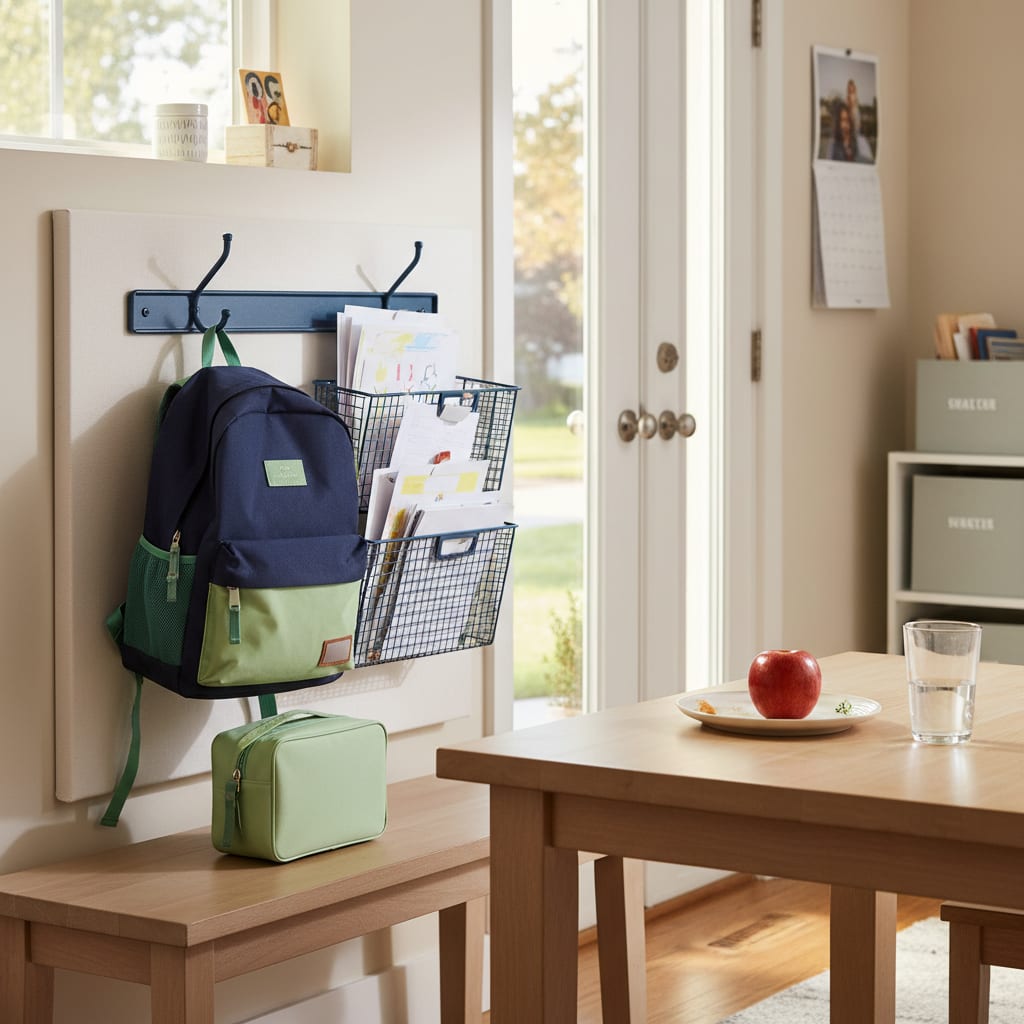
1. The unload (5 minutes, non-negotiable, immediate). Backpack to the backpack station: lunchbox out, folder papers into the inbox, bag on its hook. Done before anything fun, while momentum still exists. A backpack that makes it to the couch instead of the hook will still be on the couch at 9pm, holding tomorrow’s permission slip hostage.
2. The refuel (10–15 minutes). Kids arrive home genuinely depleted, and half of what looks like attitude at 3:45 is just hunger with a backpack on. So: snack happens, at the table, every day, at the same time. What the snack is falls outside this site’s jurisdiction — if it’s eaten, it’s a food question, and Jamie at Hey Mom Blog has the after-school snack list so I never have to have opinions about crackers. My department is the time slot and the seating chart.
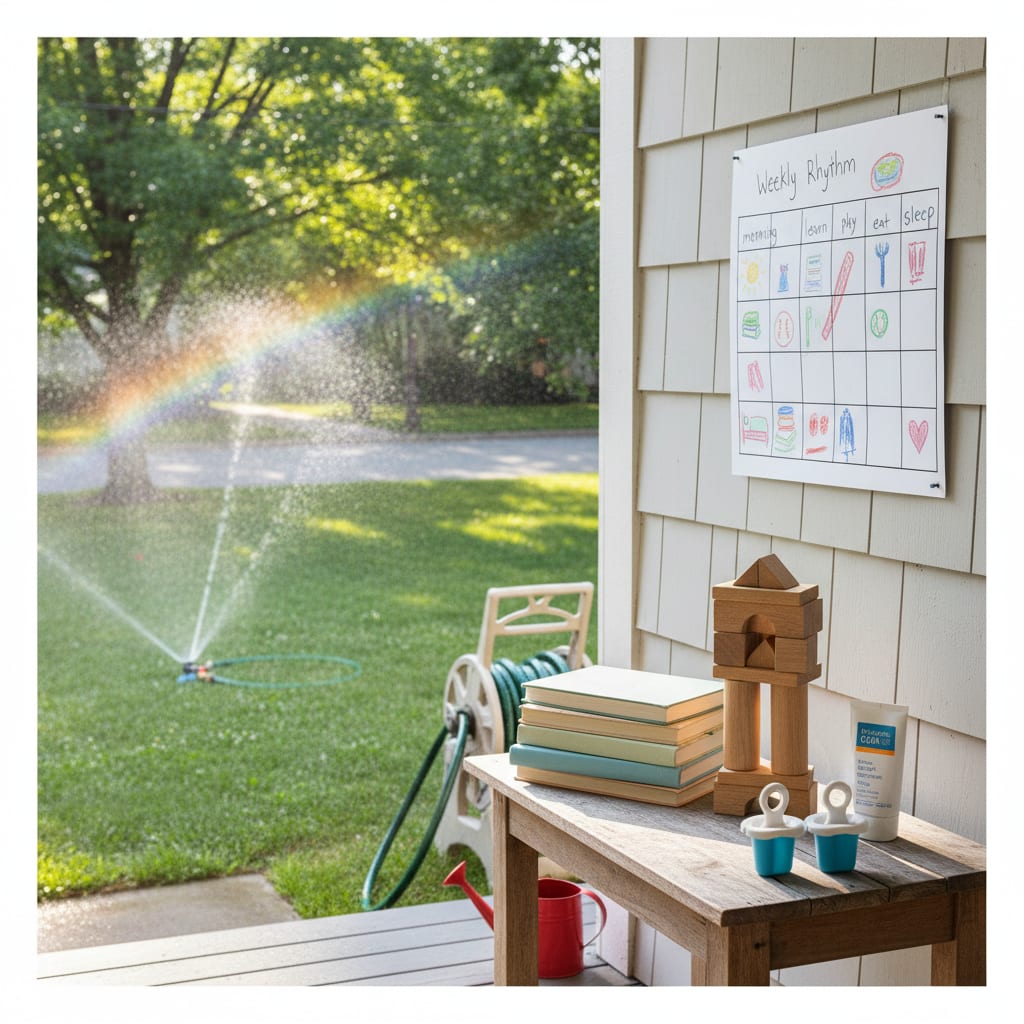
3. The decompression window (30–45 minutes, protected). No homework, no errands, no enrichment. Outside if humanly possible; unstructured either way. This is the block parents are most tempted to strip-mine for productivity, and stripping it is exactly how you buy a 5pm meltdown. The window has a posted end time — “free until 4:30” — because open-ended free time ends in negotiation and bounded free time ends on the clock.
4. The homework hour (whatever your school’s load actually requires). Same seat, same start time, parent nearby but not hovering. Starting homework at a consistent time matters far more than which time you pick. On practice nights the whole block shifts earlier and shrinks — the sequence holds even when the clock moves.
Our after-school schedule (school-day baseline)
| Time | Block |
|---|---|
| 3:15 | Pickup / bus — silence in the car is allowed and sometimes medicinal |
| 3:35 | The unload: backpack station, papers to inbox |
| 3:40 | Snack at the table |
| 3:55 | Decompression window (posted end: 4:30) |
| 4:30 | Homework block — 10-year-old at the counter, 7-year-old with me |
| 5:10 | Free play or practice launch, depending on the day |
The times flex; the order doesn’t. On the two nights a week when a 5:15 practice eats the afternoon, we run the same sequence compressed — short snack, short decompress, homework moves to after dinner — and the kids barely register the difference because the order stayed the same. That’s the whole trick of the thing.
The question everyone actually fights about: homework first or play first?
Play first — bounded, then homework — wins in our house and won in nearly every family I watched from the school front office, with one honest exception: the kid who cannot re-enter work mode once released. You know within two weeks which kind you have. If your kid melts down at the transition back, flip the order: snack straight into homework while school momentum lingers, then unlimited free time as the open horizon. The routine is a tool, not a doctrine; the only wrong answer is renegotiating the order daily, which turns every single afternoon into a courtroom.
The 3:45 interrogation, and how to stop conducting it
One more landing-pattern rule that costs nothing: don’t debrief on arrival. “How was school? Who did you sit with? What did you get on the spelling test?” at 3:16 gets you grunts and resentment. The good data comes out sideways, later — during the evening wind-down, in the car, over the snack once the edge is off. Ask the calendar questions (“anything on Friday I should know about?”) at the same time you check the folder, and let the feelings questions find their own moment. Mornings run on tight scripts; afternoons run on slack. Both are logistics.
FAQ: after-school routines
What should an after-school routine include?
Four blocks, in order: unload (backpack and papers processed immediately), snack at a set time, a protected decompression window with a posted end, then homework at a consistent start. Everything else — practices, playdates, chores — schedules around that spine, not through it.
How long should kids decompress before homework?
Thirty to forty-five minutes covers most elementary kids: long enough to genuinely reset, short enough that school momentum isn’t fully cold. The critical part isn’t the length — it’s the posted end time, which turns “time to start homework” from an ambush into a scheduled departure.
Why is my child so grumpy right after school?
It’s usually after-school restraint collapse — they’ve held it together all day and you’re the safe place where the lid comes off — compounded by plain hunger. Feed them before you ask them anything that requires civility. Most 3:45 attitude problems are actually 3:40 snack problems.
Should chores be part of the after-school routine?
The unload — backpack, lunchbox, papers — yes, because it’s launch-critical for tomorrow. Household chores beyond that live better elsewhere in the day; the afternoon already carries school recovery and homework, and stacking chores onto the landing pattern is how the whole routine gets renegotiated daily.