The Backpack Station: End the 7:38 Scramble
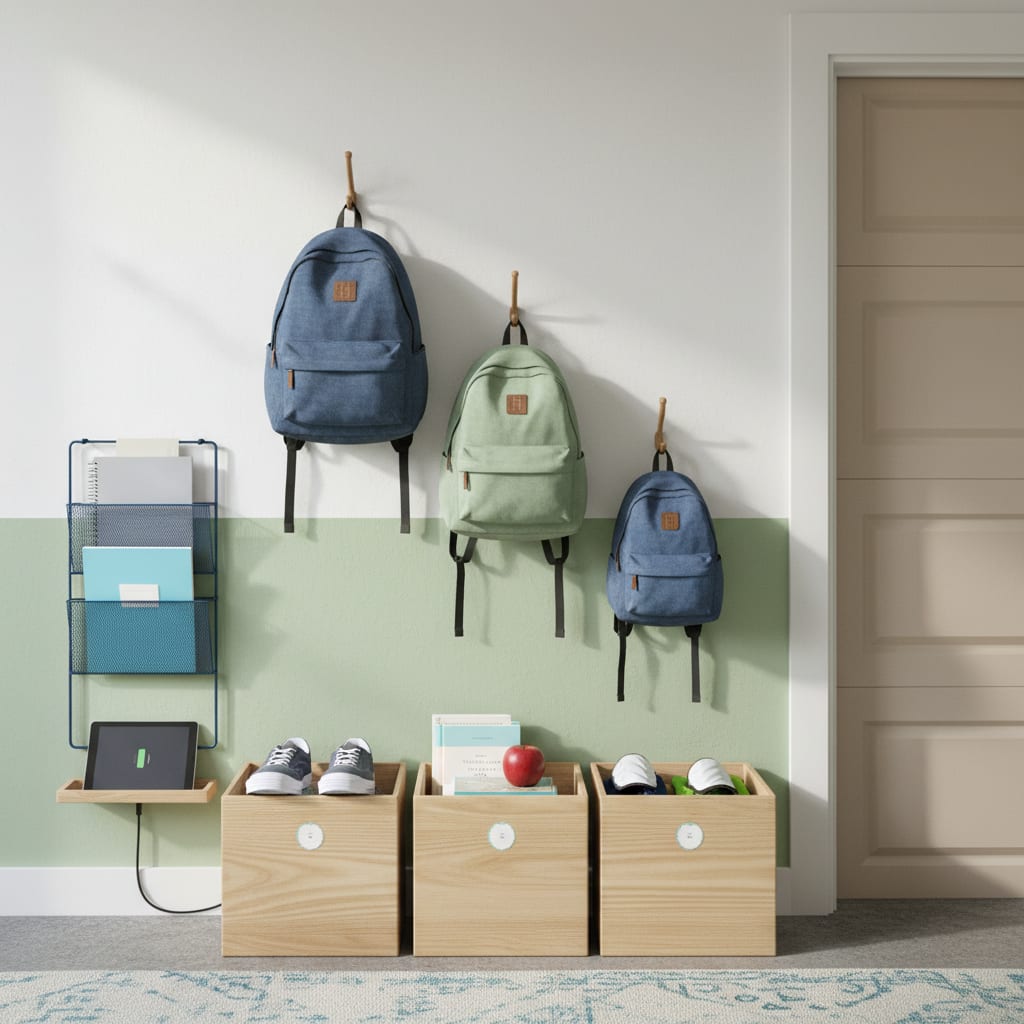
A backpack station is one dedicated launch spot by your exit door — a hook per kid, a bin per kid, a shared paper inbox, and a charging point — where school gear lands every afternoon and gets grabbed every morning. That’s it. Not a mudroom renovation, not a Pinterest wall: a parking space with assigned spots. Ours cost one row of wall hooks and three bins, took an afternoon, and ended the 7:38 where-is-your-other-shoe scramble so completely that I now get to be smug about it on the internet.
Why the station works when “put your stuff away” never did
“Away” is not a place. A seven-year-old holding a backpack and hearing “put it away” is holding an unsolvable riddle, and the backpack goes to the floor, which is a place. The station replaces an abstraction with coordinates: your hook, your bin, the inbox. Once gear has an address, two things happen — kids can actually comply, and you can see the system’s status from across the room. Three bags on hooks at 8pm means tomorrow’s morning run-sheet is already half-won. An empty hook is a flare, sent twelve hours before the crisis, telling you exactly whose stuff is still in the minivan.
Where it goes: the three-foot rule
Put the station within about three feet of the door your family actually exits — garage door, side door, wherever the herd genuinely moves. Not the pretty entryway nobody uses; not a bedroom upstairs. Every step between the station and the door is a step where a backpack can be set down “for a second,” and backpack physics says a bag at rest on the kitchen island remains on the kitchen island. Renters and small-space folks: a rolling cart parked by the door, or over-door hooks, run exactly the same system. The station is a flow, and the furniture is whatever holds the flow.
And to be clear about jurisdiction: organizing the whole entryway — coats, seasonal storage, boot trays, decor — is home organization, a different discipline run by different experts. The backpack station claims only the school-launch square footage. Build the small thing; it survives contact with your family precisely because it’s small.
The four-part build (kit-shaped, no shrine required)
- One hook per kid, at that kid’s height. A hook a four-year-old can’t reach is a parent’s hook with extra steps. Hang them low — adhesive hooks like Command large utility hooks move easily — and raise them as kids grow.
- One bin per kid underneath for the loose flotsam: shoes for tomorrow, library book, shin guards, the recorder you pray they forget. The bin is a container for exactly one day’s cargo — if it’s overflowing, that’s an archive problem, not a bigger-bin problem.
- One paper inbox for the household — a single wall file or tray where every folder-paper lands during the afternoon unload. Sign it, return it, done; the inbox flow is part of the after-school landing. Long-term filing of the keeper papers is its own art, and it doesn’t live at the launch pad.
- One charging point if your school runs devices home. The tablet charges at the station, not in a bedroom — which solves two problems, only one of them logistical.
Optional fifth element: a small clock or a printed copy of the morning chart at kid height, so the station answers “what’s next” as well as “where’s my stuff.”
The flow: unload, restage, grab
The furniture is 20% of the station; this loop is the other 80%.
- Unload (3:35pm, immediately on arrival): bag to hook, lunchbox to kitchen, papers to inbox. Ninety seconds, done before snack, powered by the momentum of walking in the door.
- Restage (8:00pm, part of the night routine): signed papers back in folders, folders in bags, tomorrow’s extras — cleats, library book, show-and-tell rock — into the bin, bag zipped, on hook. This is the step that turns the station from storage into a launch pad.
- Grab (7:30am): bag off hook, shoes from bin, gone. The morning contribution to the station is zero assembly. If anyone is packing a backpack at 7:30, the station didn’t fail — Tuesday night did, and that’s a fixable, specific, twelve-hours-earlier problem.
The two-week installation period
Like every system on this site, the station needs a launch window: two weeks where the unload happens with you standing there, cheerfully bored, pointing at hooks. Skip the lecture; run the reps. After that, the station mostly self-enforces, because the payoff — walking to the door and just leaving, like a person in a commercial — is one kids actually feel. Ours started policing each other’s hooks by week three, which I did not ask for but certainly did not stop.
FAQ: backpack stations
What do you put in a backpack station?
Per kid: a hook for the backpack and a bin for shoes and daily gear. Shared: one paper inbox and a charging point for school devices. That’s the whole roster — coats and sports equipment can join if you have the room, but the school-launch core stays that small.
Where should a backpack station go in a small house?
Within reach of the real exit door, even if that means a rolling cart, a bench with cubbies, or hooks on the back of the door itself. The system is hook-bin-inbox flow, not furniture; a $20 rack by the right door beats built-ins by the wrong one.
How do I get my kids to actually use it?
Anchor it to arrival: bag on hook before snack, every day, with you running the drill alongside them for the first two weeks. Then let the hooks do the talking. The empty-hook-at-8pm check is the only enforcement most families ever need.
Backpack station vs. mudroom — what’s the difference?
The mudroom is a room; the station is a system that borrows three feet of one. If you’re choosing where to spend effort, build the station first — it’s the part that moves the morning — and treat the rest of the entryway as a separate, slower project.