The Lunch-Packing Station: 10 Minutes, Zero Decisions
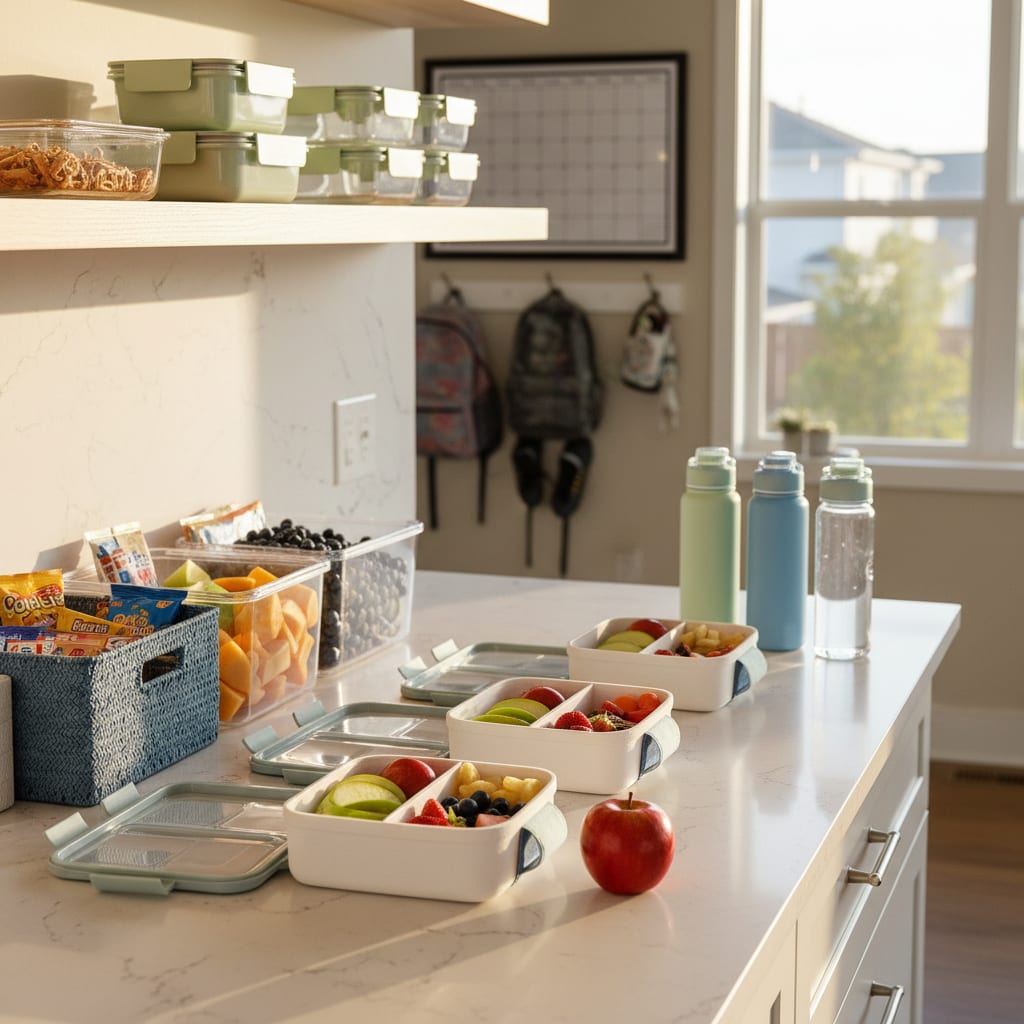
A lunch-packing station is four fixed zones — a container shelf, a dry-goods bin, a fridge bin, and one clear stretch of counter — plus a ten-minute assembly slot the night before, worked in the same order every time: boxes open, main, sides, fridge items, zip, done. The point of the station is that nobody decides anything at packing time. Every decision was made once, on Sunday, when the bins got loaded. What’s left on a school night is pure assembly, and assembly is fast, delegable, and impossible to argue with.
Decisions are the expensive part
Watch a lunch get packed without a station and time it. The packing takes four minutes; the deciding takes eleven — standing in front of an open fridge, negotiating with a 7-year-old about whether she likes turkey this week (she does not; she liked it last week), hunting the matching lid. A station attacks exactly that: it collapses the decision space to “one item from each bin,” made from pre-approved stock. This is the same logic as the backpack station — you’re not organizing stuff, you’re pre-making choices — applied to the one school-morning job that can’t be done days ahead.
One boundary before we build, because it keeps this post honest: this is a workflow post. What actually goes in the lunch — the menus, the picky-eater diplomacy, the things children will reliably eat — is a food question, and food questions get referred to Jamie at Hey Mom Blog, whose school lunch ideas for picky eaters and no-cook lunch list are what our bins are stocked from. My department is the counter, the clock, and the order of operations.
The four zones
Zone 1 — the container shelf. One shelf or drawer holding lunchboxes, containers with lids pre-matched, water bottles, and ice packs’ daytime home. Matching lids at packing time is a search job; matching them at unload time is a ten-second habit. Containers that have lost their lids leave the roster — this shelf runs like a team bench, and there are cuts.
Zone 2 — the dry bin. A pantry bin holding the week’s shelf-stable sides, portioned or grab-ready. Loaded once on Sunday from the approved list. When the bin’s empty, sides are done for the week — the bin is also the inventory system, which is one less list.
Zone 3 — the fridge bin. Same idea, one bin at kid height in the fridge: the cold sides and prepped items for the week. Kid height matters because of who’s about to do this job (see below).
Zone 4 — the runway. One cleared stretch of counter, wide enough for every lunchbox open at once. It earns its keep at 8:15pm and again at 7:20am, and it stays empty in between. A station without clear counter is a cabinet.
The ten-minute assembly line (8:15pm)
Ours runs right after homework wrap-up in the school-night routine, and it runs like a line, not a craft project: all boxes open on the runway. Mains in — whatever the plan says, no reopening the menu question at 8:15. Dry bin: each kid takes one, drops it in. Fridge bin: same. Bottles filled and fridged, boxes zipped and fridged, runway wiped. Ten minutes, and the only morning task left is ice pack in, box in backpack — a two-touch move that lives on the morning run-sheet at 7:20.
Night-before is the hill I’ll die on. Morning packing means doing the day’s most decision-flavored chore at the hour with the least slack; one missing lid at 7:25 and the whole out-the-door sequence starts paying interest.
Who packs: the kids, obviously
The station’s quiet payoff is that it makes lunch-packing an age-appropriate kid job. My 10-year-old runs her whole line solo; the 7-year-old does everything but the main; even the 4-year-old can pull one item from each bin, which he treats as a heist. This only works because the bins are pre-approved stock — delegating “pack your lunch” without a station is delegating decisions, and you’ll be re-litigating chips at 8pm. Delegating assembly is just handing over a checklist. Front-office rule: never staff a judgment call where a checklist will do.
FAQ: lunch-packing stations
What do I need to set up a lunch-packing station?
Nothing new, usually: one shelf for containers and bottles, one pantry bin, one fridge bin, and a cleared stretch of counter. The system is the four zones plus a fixed packing time — not a product list. Buy matching containers only after the current mismatched ones have been cut from the roster.
Should school lunches be packed the night before?
Yes — everything except the ice pack. Night-before packing moves the job to an hour with slack in it, and cold items hold fine in the fridge overnight in a closed lunchbox. The morning task shrinks to ice pack in, box in backpack.
How long should packing lunches take?
About ten minutes for three lunches, once the station exists — because Sunday’s bin-loading already made every decision. If it’s taking twenty-five, the time is going to decisions or searching, and the fix is stocked bins and pre-matched lids, not more hustle.
What age can kids pack their own lunch?
With a stocked station: around 4 for pulling sides from bins, around 7 for everything but the main, and by 9 or 10 the whole job. The station is what makes this safe — kids assemble from approved stock instead of negotiating the pantry at large.