Pinworms in Kids: The Itchy Night and the Household Plan
A preschooler who wakes in the night scratching their bottom may have pinworms, a very common, harmless infection that spreads easily through a household. Night itching and trouble sleeping are the classic signs. Call your pediatrician, who may ask you to do a simple tape test at home. Treatment is usually two doses of medicine two weeks apart, often for the whole household at once. Morning baths, short nails, hand-washing and hot-wash laundry help stop it coming back. Medically, it is a small problem. Logistically, it takes over your house for about a month.
I run a schedule, not a clinic. The medical facts below come from the CDC, the AAP, KidsHealth and the NHS; your pediatrician has the final word.
The signs, and why they show up at 2am
The CDC’s pinworm overview says symptoms are “usually mild, and some people have no symptoms.” When they do appear, “it is typically itching around the anus,” and “some infected people have difficulty sleeping or restlessness.” The CDC lists school-aged and preschool-aged children first among the people most at risk.
The night timing has a reason. KidsHealth’s pinworm guide for parents explains that adult female worms lay eggs on the skin around the anus, “which makes the area itchy. Often, this happens at night.” Its signs also include sore skin from scratching, and tiny white worms “like a piece of thread, as big as a staple,” seen around the anus two to three hours after your child falls asleep, in the toilet, or in underwear in the morning.
The NHS page on threadworms, the British name for the same worm, adds “irritability and waking up during the night.” KidsHealth notes that pinworms “are often mistaken for other causes of itching or sleep problems.”
Call the pediatrician, then do the tape test if asked
KidsHealth’s advice is to call the doctor if your child complains of itching or always seems to be scratching. The doctor may ask you to help with the diagnosis by doing a tape test at home.
The CDC’s diagnosis page gives the timing: “First thing in the morning is the best time, before the person washes, goes to the bathroom, or gets dressed,” three mornings in a row. Seal the tape in a bag or the container you were given, and wash your hands afterwards.
For the run-sheet, that means three mornings where the tape test comes before the bathroom. Put a reminder on the bathroom door the night before.
Why the whole house gets treated, and why there are two doses
This is where pinworms become a household project. The CDC says to “treat everyone in the same household and caregivers of the person diagnosed with pinworms at the same time.” Treatment “involves two doses of medication with the second dose given two weeks after the first dose.” The NHS says to treat everyone in the household aged 2 and over, “even if they do not have symptoms,” and HealthyChildren’s pinworm page from the AAP explains why: one family member “may be a carrier without having any symptoms.”
The reason for the second dose: “Medicine kills the threadworms, but it does not kill the eggs,” in the NHS’s words. The second dose catches the worms that hatch afterwards.
Which medicine, how much, and for whom are questions for your pediatrician or pharmacist. Ask specifically about anyone under 2, pregnant or breastfeeding; the AAP notes the usual medicine is not recommended for children under two.
The month on the calendar
The CDC asks that “everyone in the household follow these steps for two weeks after the last treatment dose.” Count it out and the whole thing runs about four weeks from the first dose. It goes on the command-center calendar the day you get the diagnosis, the same way any recurring appointment would:
| When | What happens | Who |
|---|---|---|
| Week 0, day of diagnosis | First dose for everyone the doctor says to treat. Strip and hot-wash all beds. Trim and scrub every pair of nails | Whole household |
| Every morning, weeks 0–4 | Shower, clean underwear, scrub nails at the sink | Everyone |
| Every evening, weeks 0–4 | Fresh pajamas, towels to the wash, hands washed before bed | Everyone |
| Week 2 | Second dose, exactly as the doctor or pharmacist directed | Whole household |
| Week 4 | Hygiene routine ends; normal laundry day returns | — |
The week-2 dose is the step most likely to slide, and the one that stops the cycle. Give it a reminder.
The morning bath moves into the run-sheet
The CDC’s prevention steps say to “bathe every morning and change underwear to help remove pinworm eggs deposited overnight.” It also says to have children bathe separately, to take a shower rather than a tub bath “because tub water can spread pinworm,” and not to share or reuse washcloths.
That adds a shower per person to a morning with no slack, for four weeks. Rework the school morning routine once instead of improvising daily: showers staggered youngest first so a parent can supervise, clean underwear laid out the night before, one towel hook per person.
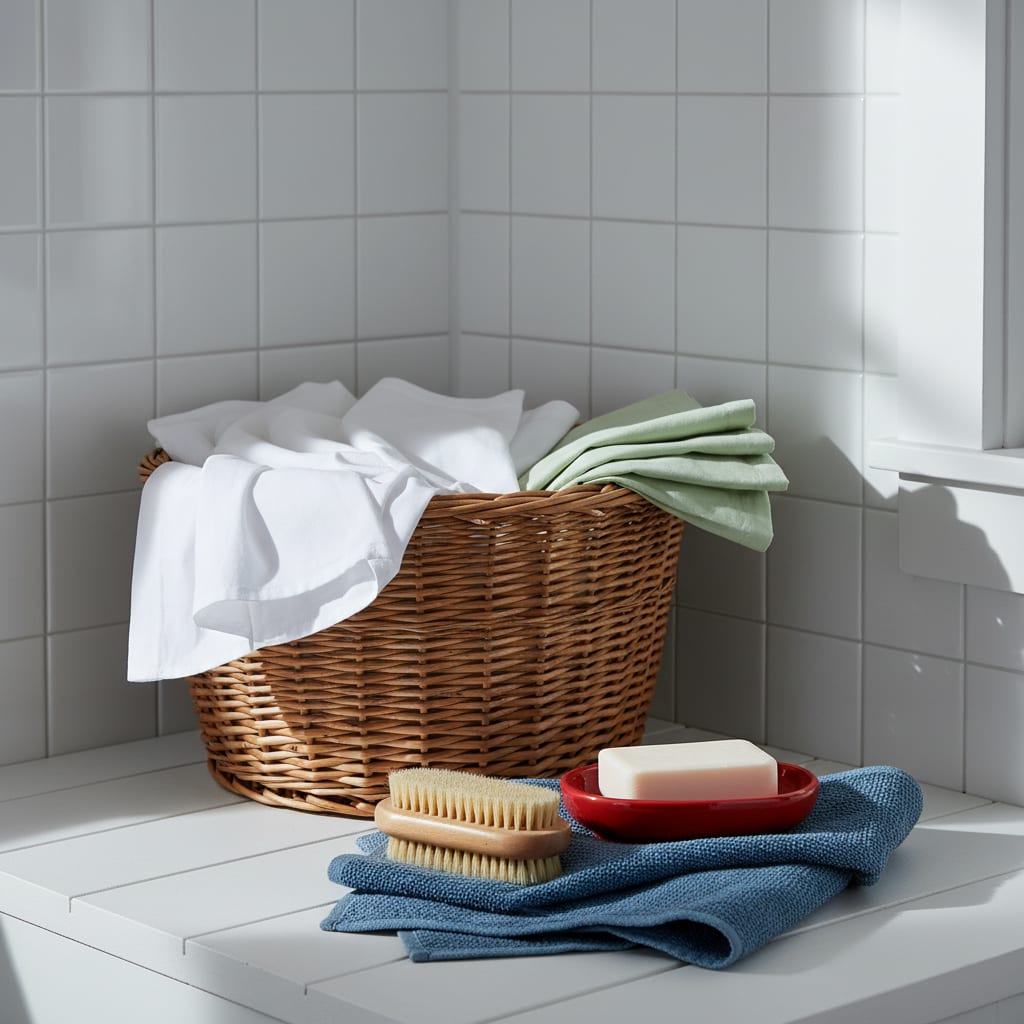
Nails get their own line item. The CDC says to keep fingernails clean and short, to trim and scrub them after treatment, and to avoid scratching and nail-biting. A dedicated nail brush at the sink, like this plain Green Sprouts nail brush, makes the scrub a two-second step after every hand-wash.
Laundry day becomes laundry every day
Pinworm eggs travel on fingers to anything a person touches: KidsHealth lists clothing, bed linens, towels, toys and kitchen surfaces. The CDC says the eggs “can survive 2 – 3 weeks on objects” if they are not washed or cleaned.
The CDC’s laundry instructions:
- change the affected person’s night clothes, underwear, washcloths, towels and bedding often
- avoid shaking them out
- wash them in hot water, at least 130°F, and dry them in a hot dryer, because “the heat will help kill pinworm eggs”
The NHS adds soft toys to the hot wash, plus disinfecting kitchen and bathroom surfaces with hot water and vacuuming.
Run one hot load every evening instead of saving it for the weekend. A lidded basket in each bedroom lets nightclothes and sheets go straight in unshaken, and a spare set of sheets set out per bed saves a 2am hunt.
The 2am wake-up itself
When the itch wakes your child, help them settle without scratching; KidsHealth says to tell kids not to scratch or bite their nails. Then wash your own hands. The CDC lists touching someone with pinworms among the times hand-washing matters most.
KidsHealth notes that even after the medicine works, “the itching may continue for about a week,” and the doctor may suggest something for it.
If waking continues well after the itching has stopped, a habit may have outlasted the cause. Betteroo’s toddler guide recommends answering night wakings with boring consistency: the same brief, calm script every time. The rest of the evening is the regular school-night routine, unchanged.

Preschool: going in, and telling the teacher
The NHS says plainly: “If you or your child has threadworms there’s no need to stay off nursery, school or work.” The CDC gives no attendance rule, but notes that repeat infections “are common, especially among household members or playmates at a childcare center or school.” Your center’s own written policy still applies, so check the handbook, the same place the sick-day plan sends you for every exclusion question.
Tell the preschool anyway. The AAP suggests encouraging the child care provider to wash toys frequently when pinworms have been found. A quick note to the teacher is enough.
FAQ: pinworms in kids
Can my child go to preschool with pinworms? The NHS says there’s no need to stay off nursery or school. Check your center’s written policy, and tell the teacher so the toys can be washed.
Does everyone in the house need treatment? The CDC recommends treating the whole household and caregivers at the same time, because people can carry pinworms without symptoms. Your pediatrician or pharmacist decides who and what.
Can pinworms cause bedwetting? They can. KidsHealth says pinworms can irritate the urethra and lead to bedwetting, and suggests asking the doctor whether pinworms could be the reason a child has started wetting the bed.
Can we get pinworms from the dog? No. The CDC says you “can’t get infected from your pets,” and KidsHealth agrees pinworms don’t come from animals.