Before- and After-Care: Making the Handoffs Work
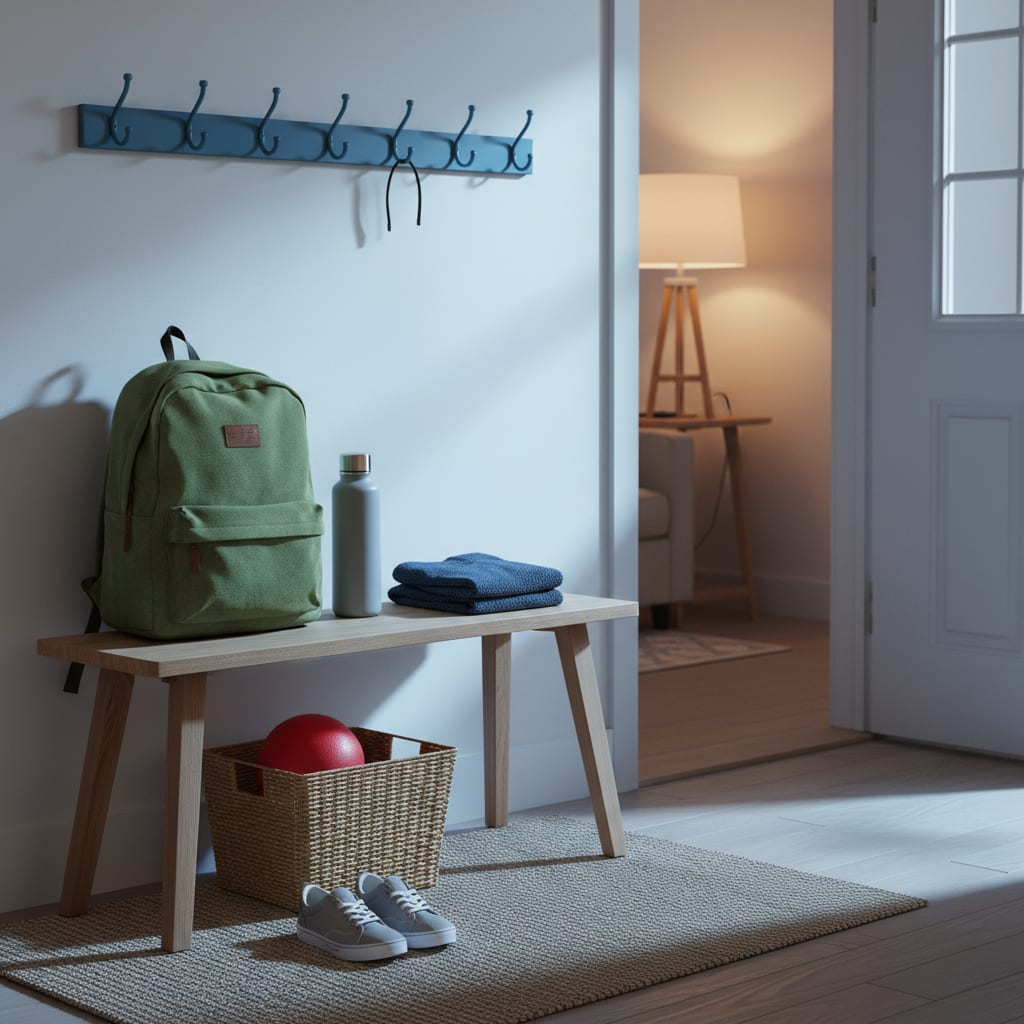
Before- and after-school care isn’t really a program you enroll in; it’s four handoffs you either schedule properly or fight all year — the morning drop, the transfer from care into the school day, the transfer back out at dismissal, and your pickup. Each one needs the same three things: a named adult on both sides, a time with real slack in it, and a bag that nobody has to repack midway. Get those right and care buys you two hours of coverage a day. Get them wrong and you spend the year arriving at 6:02 for a 6:00 deadline.
The four handoffs that decide everything
Write these down before you sign a single form, because the program’s schedule and your household’s schedule have to overlap at all four:
- You to before-care. Doors open at a fixed time — often not as early as you’d like — and there is usually no credit for arriving before it.
- Before-care to the classroom. Staff walk them, or they’re released at the bell. Either way, this is where a forgotten item becomes unreachable for six hours.
- Dismissal to after-care. The riskiest handoff of the four, because it’s the one that changes: on a half day, on a club day, on a day your kid decides to walk to the bus with a friend instead.
- After-care to you. The one with a deadline attached, and the only one with a price.
Handoff three is worth a specific conversation with the school at enrollment: who physically checks that your child arrived, and what happens when they don’t. Every program has an answer. Not every family has asked for it.
Registration is a calendar item, not a decision
Care spots are frequently capped, and the good programs fill in the spring for the following fall. Nobody sends a reminder that the window closed. So the enrollment date goes on the calendar as a lead-time entry the same way any other deadline does, alongside the rest of the year’s fixed dates — a week before the window opens, not on the day it closes.
Three specifics to confirm while you’re registering rather than in October: whether a spot rolls over automatically to next year, what happens on early-dismissal and no-school days (many programs close exactly when you need them most), and how to add or drop days mid-year. That last one determines whether care is a fixed cost or a flexible one, and the answer varies enormously.
Match the morning window to your commute
Before-care is a departure-time problem in disguise. Take the doors-open time, add your realistic drive, and compare that with the moment you actually need to be gone. If the doors open at 7:00 and you need to be on the road at 7:05, before-care isn’t buying you anything on a bad morning.
Then work the school morning routine backwards from the drop time, not the bell. This is the adjustment most families miss in September: care moves your out-the-door moment forward by twenty or thirty minutes, so every step upstream — wake, breakfast, shoes — has to move with it. A routine calibrated to a 7:40 departure does not survive being asked to produce a 7:10 one.
Pack one bag that survives the whole day
The single biggest friction in care is the two-bag household — school stuff in one, care stuff in another, and something critical in whichever one is at home. Consolidate. One bag leaves the house, and everything the whole day requires is inside it before anyone goes to bed.
The standing contents, kept at the backpack station so it packs itself:
- A spare set of clothes that lives in the bag permanently and gets swapped by season, not by incident.
- A water bottle that survives being sideways in a bag for nine hours, like the Thermos Funtainer.
- Whatever the program requires for outdoor time — the layer, the hat, the sunscreen — as a permanent resident rather than a daily decision.
- The homework folder, because a lot of care programs run a homework block and that block is free labor you should absolutely accept.
Snack rules differ by program; ours works on a snack the kids bring, and the packing happens at the station on Sunday, not in the car.
Pickup deadlines are hard numbers
The late fee at most after-care programs is charged by the minute, it starts the moment the clock turns, and it is not symbolic. Treat the deadline like a flight: aim to arrive ten minutes early on an ordinary day, because the ordinary day is what absorbs a train delay or a school-zone backup.
Then build the two lists that keep a bad day from becoming an incident. The authorized pickup list should carry at least two adults besides you, added at enrollment rather than in an emergency, since most programs won’t release a child to someone who isn’t on it no matter how well the staff know them. And your own backup call order — first person you’d ring at 5:35 when you’re stuck, second person, third — decided while you’re calm.
From after-care to a 5:15 practice
Care and sports collide constantly, and the collision is always the same shape: pickup at 4:45, practice across town at 5:15, and a kid who needs to change and eat in between.
The fixes are ordinary once you look at it as a route rather than a crisis. Cleats and kit go in the car in the morning, not the house. Whoever collects from care is whoever’s driving to practice, even when that’s not the usual parent. And the fifteen-minute changeover happens in the parking lot at the field, not at home, because going home first adds a leg you don’t have. The practice-night time map is built for exactly this stretch of the afternoon.
A shorter landing when they get home
Coming home from care at 5:40 is a different arrival from coming home from the bus at 3:20, and the after-school landing routine has to be compressed to match. Two things change: the decompression window shrinks to about fifteen minutes, and homework may be partly done already, so the first question is what’s left rather than what’s due.
The one thing that should not compress is unpacking. Bag emptied, bottle out, folder onto the counter — four minutes, right at the door, before anyone sits down. A day that ran through three buildings produces more loose objects than an ordinary one, and every single one of them turns into a 7:15 problem tomorrow.
FAQ: before- and after-school care logistics
When should I sign up for before- and after-school care?
As early as the program allows — often the spring before the school year, since popular programs cap enrollment and maintain waitlists. Put the opening date on the calendar with a week’s lead time, and confirm whether your spot rolls over automatically each year.
What should my child bring to after-school care?
One bag holding a permanent spare set of clothes, a water bottle, the seasonal outdoor layer, the homework folder, and whatever snack the program’s rules require. Pack it the night before at the same spot the school bag is packed, so nothing depends on a second bag at home.
What happens if I’m late picking up from after-care?
Nearly all programs charge a late fee by the minute and most escalate after repeated lateness, so treat the deadline as fixed. Add two backup adults to the authorized pickup list at enrollment and settle your own call order in advance — the day you need it, you won’t be in a position to work it out.
How do I fit after-care and sports practice into the same afternoon?
Load the gear into the car in the morning, have the same adult do the care pickup and the practice drive, and change at the field rather than going home. If pickup and practice start within half an hour of each other, the trip home is the leg to delete.