How to Help Kids With Homework Without Doing It for Them
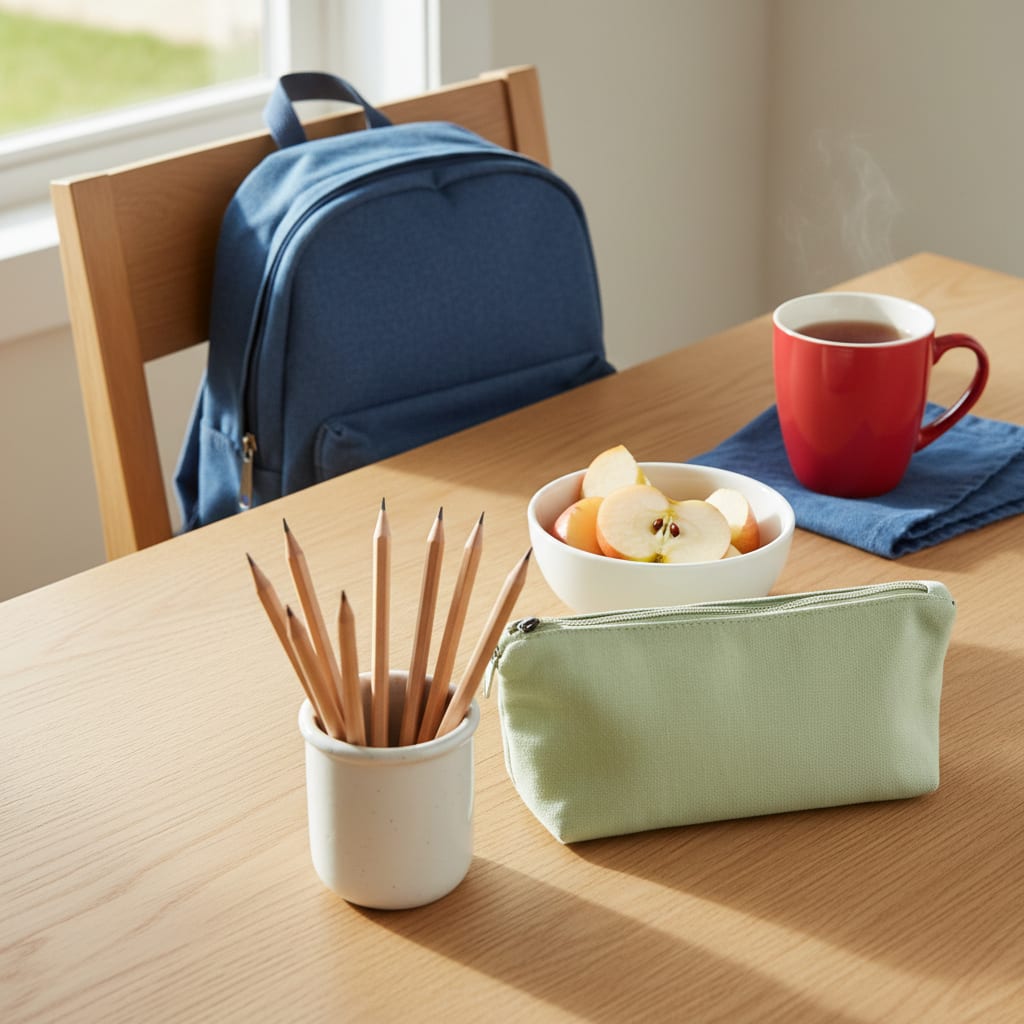
The way to help kids with homework is to run the session, not the worksheet. Give homework one start time and one place, stay close enough to answer a real question, and keep your hands off the pencil. When the work is done, do a two-minute check, then a sign-off. Have a stop time for the nights it won’t finish. If you want to help your child with homework in a way that still works in May, that’s the job: you’re the shift supervisor, not the second student. Nemours KidsHealth puts the parent’s role the same way: offer support and guidance, answer questions, help interpret the instructions and review the finished work, “but resist the urge to provide the right answers or complete assignments.”
The homework routine: one start time, every school day
Most homework fights aren’t about fractions. They’re about when. If homework starts “after you’ve relaxed a bit,” the start time gets renegotiated every afternoon, at 4:30, with tired people. KidsHealth’s first tip is a regular time and place each day. The American Academy of Pediatrics’ back-to-school advice says to schedule ample time for homework and build that time into decisions about after-school activities.
In our house that’s 4:15. It comes after the snack-and-reset landing and before free time, inside the after-school routine. The place and the supplies are their own build, covered in the homework station post, along with why the start time is an appointment rather than a nag. Here is how the session runs once it starts:
| Minute | What happens | Who runs it |
|---|---|---|
| 0 | Sit down, folder open, everything out of the bag | Kid |
| 0–3 | Take stock: what’s due, what’s big, what’s easy | Kid, with you asking |
| 3 on | Work, in the order they chose | Kid |
| As needed | A real question, or a short break | You answer, or call the break |
| End | Two-minute check, then everything back in the folder | Kid shows, you look |
| Stop time | Finished or not, the session ends | You |
Start with three minutes of taking stock
Before the first problem, have your child spread out the folder and say out loud what’s there. KidsHealth suggests teaching kids to take stock of how much homework there is and what it involves, so they can plan for their workload and temperament. Some kids want the hard thing first while their energy is highest; others want the easy wins out of the way. Let them choose. What matters is that they chose, because the goal is a fourth-grader who does this step without you.
For a long assignment, like a book report or a project, the taking-stock step is where it gets broken into dated pieces. Those pieces go on the family calendar as entries, so “the diorama is due Friday” doesn’t arrive as news on Thursday night.
Your job: nearby, busy, not co-authoring
The parent’s position matters more than the parent’s knowledge. KidsHealth says the kitchen or dining room table is popular with younger children because they feel more comfortable near you, and that older kids may prefer their rooms as long as you check in and review the work at the end.
Either way, be in range and occupied: dinner prep, the mail, your own list. Sit right next to a seven-year-old and you become the tool she reaches for before her own brain. When she asks a question, answer it with a question first (“What does the example at the top do?”), and help her read the instructions rather than solving the problem for her. KidsHealth’s version: focus on helping kids build the problem-solving skills they’ll need for this assignment and the next one.
The line I hold: I can explain the instructions; I don’t write anything on the page. If I can’t help without writing, that’s information for the teacher (more on that below), not a reason to pick up the pencil.
Timers and breaks, used as tools
The AAP notes that some children need extra help organizing their homework, and that checklists, timers and parental supervision can help. A visual timer that shows time draining away, like the 8-inch Time Timer, turns “how long is this going to take” into something a seven-year-old can see across the table.
Breaks are the other tool. The AAP suggests closing the books for a few minutes to stretch, and KidsHealth says to let a child take a break if needed and then guide them back with fresh focus. Betteroo keeps a list of one-to-five-minute reset ideas sorted into movement, calming and game breaks. The rule that keeps a break from swallowing the session: it has an end time, and you name it before it starts.
Screens stay off for the whole session. That’s straight from the AAP’s list: a household rule that the TV and other electronic distractions stay off during homework time.
The two-minute check and the sign-off
When your child says “done,” don’t take it on trust and don’t regrade it either. Run a quick check:
- Is everything on the “due” list from minute zero finished, or marked as stopped?
- Is there a name on every page?
- Is anything that needs a parent signature signed?
- Is it all back in the folder and in the bag?
That’s it. You’re checking that the work is complete and packed, not that it’s correct. Mistakes are information for the teacher, and a worksheet a parent has quietly fixed tells the teacher the wrong story. The folder goes to the backpack before free time starts, so nothing is left to stage at 7:00pm.
Know what the teacher actually expects
Half of homework help is knowing the teacher’s rules, and they differ between classrooms: whether parents should check answers, how long a night’s work is meant to take, what to do when a child is stuck. Ask early in the year, then ask again at conference night. KidsHealth suggests staying in touch with teachers through the year and asking to be kept in the loop about quizzes, tests and projects. The AAP says that if you have concerns about the assignments your child is getting, talk with the teacher.
The stop rule
Some nights it will not finish. Pick a stop time and keep it. When it arrives, the session ends, a one-line note goes in the folder (“Stopped at 8:15, finished 1–6”), and it’s signed and packed. The full version of that rule, and how to stage homework around a younger sibling’s bedtime, is in the homework-past-bedtime post.
When homework is a fight every night
A routine fixes routine problems. It doesn’t fix a child who can’t do the work. KidsHealth notes that consistent complaints or ongoing struggles with assignments could point to a bigger problem, and that reviewing homework with your child and talking to the teacher is how you catch learning problems early. I run a schedule, not a clinic. If the system is in place and homework is still a nightly siege, that’s a conversation with the teacher and, if the teacher agrees there’s something to look at, with your pediatrician. The AAP’s page notes that if you think your child would benefit from special education services, you can ask the school for an evaluation, and your pediatrician can help you write the request.
FAQ: helping kids with homework
Should I check my child’s homework for mistakes?
Check that it’s complete, named, signed and packed. Whether to correct mistakes is the teacher’s call, so ask. Many teachers would rather see the real errors, because those show what to reteach.
How much should I help my child with homework?
Enough to keep them working: explain the instructions, ask a guiding question, call a break. Don’t supply answers or write on the page. KidsHealth’s guidance is to offer support and review the work, but not complete it.
What is a good homework routine for elementary school?
One start time on school days, one place, taking stock first, screens off, short breaks with an end time, a two-minute check, and the folder back in the bag before free time. Practice nights get their own start time, set on Sunday.
What if my child says they have no homework?
Check the folder together for a week. If “no homework” and what comes home don’t match, ask the teacher how assignments are posted. Many classes list them online, and that becomes the source you check at minute zero.