Parent-Teacher Conference Night: What to Ask
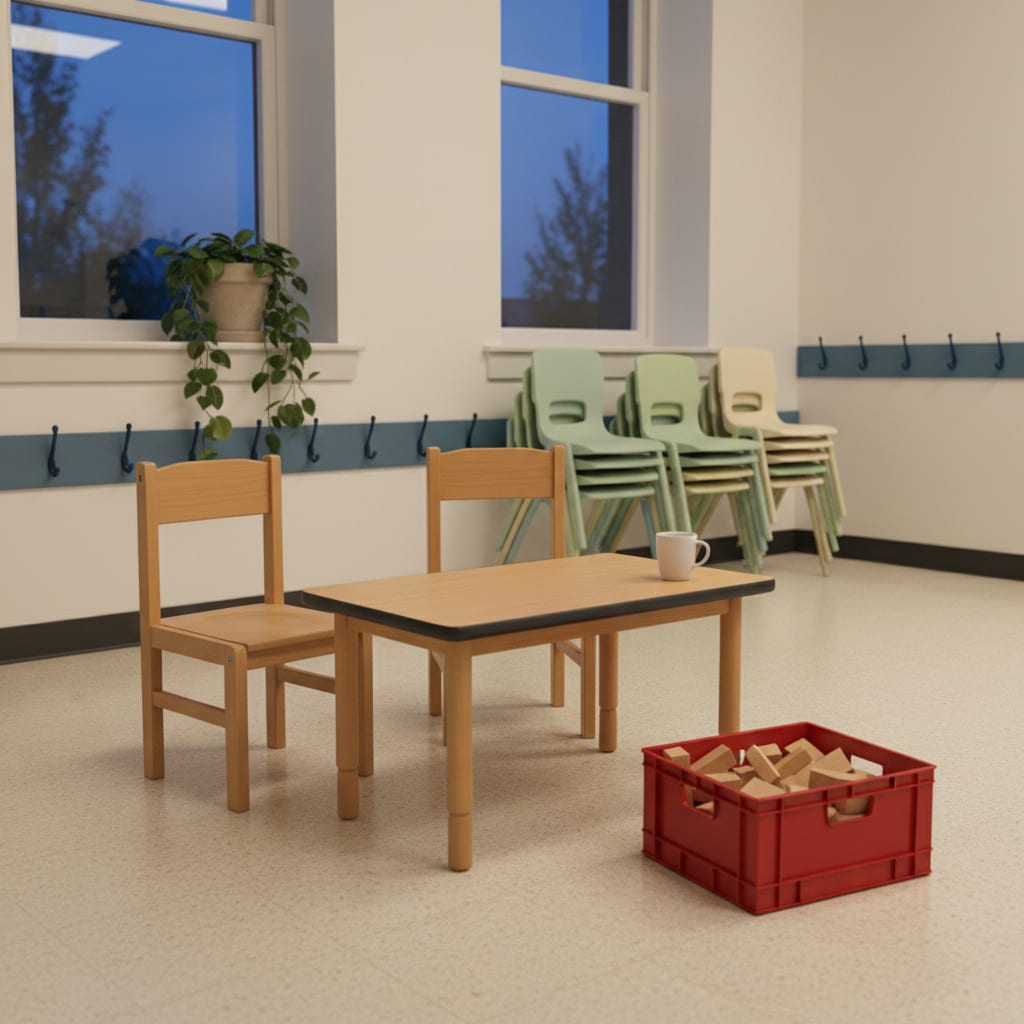
Conference night runs on a schedule tighter than most people expect: you get somewhere around ten to fifteen minutes, the teacher has six more families behind you, and the parents who leave satisfied are the ones who arrived with three questions instead of a mood. So treat it as a meeting — grab the best slot the moment sign-ups open, sort childcare and the sibling collision before you commit, bring one page rather than a folder, ask the three questions that actually change something at home, and walk out with a named next step and a date on the calendar.
Book the slot before you plan anything else
Conference sign-ups open on a link buried in a newsletter and the good times are gone in a day. The good times, ranked by everyone who has ever run a front office:
| Slot | What you’re getting |
|---|---|
| First of the evening | Teacher is fresh, running exactly on time. Best available. |
| First after a break | The schedule has just been reset — no accumulated delay. |
| Mid-block | Fine, but expect five to ten minutes of drift. |
| Last of the night | The teacher has said the same sentence forty times. Avoid unless it’s the only slot that fits your drive. |
Two kids at the same school: book back-to-back with one empty slot between them if the system allows, never adjacent, because an over-running first conference eats the second. Two kids at different schools on the same night is a two-adult night or a two-evening plan; nobody drives across town in the eleven minutes the sign-up sheet implies.
Get the dates in early, too. Conference evenings are published with the district calendar in August, which is exactly what the school-year calendar sweep is for — the families who get the 5:10 slot are the ones who knew the date six weeks before the link appeared.
Twelve minutes is the actual length
Plan the conversation against the real number, not the one on the invitation. Roughly: two or three minutes of the teacher’s summary, five or six for your questions, two or three to agree on what happens next. That’s it, and the clock is enforced by a parent standing in the hallway.
Which means some conversations do not belong in that room. A serious concern — anything about a learning difference, a persistent social problem, a testing question — needs a separate, scheduled meeting with more time and, often, more people. Asking for that meeting is a perfectly normal thing to say at conference night, and it’s a better outcome than trying to compress it into nine minutes with a queue outside.
The three questions worth the time
Most parents ask “how’s she doing?” and receive a kind, general answer that tells them nothing. These three do more work:
- “Is she roughly where you’d expect at this point in the year, and what are you looking at when you say that?” The second half is the useful half. It moves the answer from impression to evidence, and you learn what the teacher is actually tracking.
- “What does she do when the work gets hard?” Teachers see a version of your kid you never see — the one who freezes, or bluffs, or asks three tables away instead of raising a hand. This is the single most revealing question I’ve ever asked at a conference.
- “What’s one thing we could do at home that would actually help?” One. Ask for a single thing, and you’ll get something specific and doable instead of a list you’ll abandon by Thursday. Whatever it is has to survive an ordinary weeknight, so measure it against the real school-night run-sheet before you agree to it.
If your kid has a specific wobble you already know about, that’s a fourth question and it goes first, not last.
Bring one page, not a folder
Write down your questions before you leave the house — on your phone, on the back of an envelope, wherever — because the room is warm, the chairs are small, and half of what you meant to ask evaporates the moment the teacher starts talking. One page: your three questions, plus anything the school already sent you that you didn’t understand.
Leave the rest in the car. The stack of graded work and flyers belongs in the daily school-paper inbox system, not on a tiny table at 6:20pm. If a specific piece of work prompted your question, bring that one piece.
Childcare on a conference evening
Conference night is an evening event with no childcare attached, and the school’s own calendar frequently makes it a half-day too. Three workable answers, in the order I’d try them:
- Swap with another family. You take their kids for their slot, they take yours for yours. This is what the street contact list is for — if you don’t have one, the neighborhood roster is a twenty-minute build that pays out on exactly this kind of night.
- Split the adults. One goes, one stays home. Perfectly respectable; agree in advance who’s reporting back and how, or you’ll get a three-word summary.
- Bring them and prepare them. Some schools host activities in the gym; many don’t. If you’re bringing a younger sibling into a twelve-minute meeting, expect to spend some of those minutes on him.
Leave with a next step and a date
The conference is only worth the parking if something is different afterward. Before you stand up, land two things: what you’re doing at home, and when you’ll check whether it worked.
Then put the check-in on the calendar as a real entry, five or six weeks out — not “sometime.” A short email to the teacher within a day or two (“here’s what we agreed, here’s what we’re trying”) costs three minutes and makes the follow-up conversation start from a shared record instead of two different memories.
FAQ: parent-teacher conferences
What questions should I ask at a parent-teacher conference?
Ask what evidence sits behind “doing fine,” ask what your child does when work gets difficult, and ask for one specific thing to do at home. Add any concern of your own at the start, while there’s still time on the clock, rather than at minute eleven.
How long is a parent-teacher conference?
Usually somewhere between ten and fifteen minutes on a scheduled night, and the schedule slips as the evening goes on. Plan your questions for the shorter end and pick an early slot if you can.
What should I bring to a parent-teacher conference?
Your written questions and, if it’s relevant, the one piece of work or the one letter you want to talk about. That’s genuinely it. A folder of paperwork slows the meeting and gets read by nobody.
What if I can’t attend conference night?
Say so as early as you can and ask for a phone or video slot, which most teachers will offer outside the evening block. Send your questions in advance either way — a teacher who’s had two days to think about your question gives a better answer than one asked cold at 7:40pm.