The Street Roster: Every Parent's Number, One Page
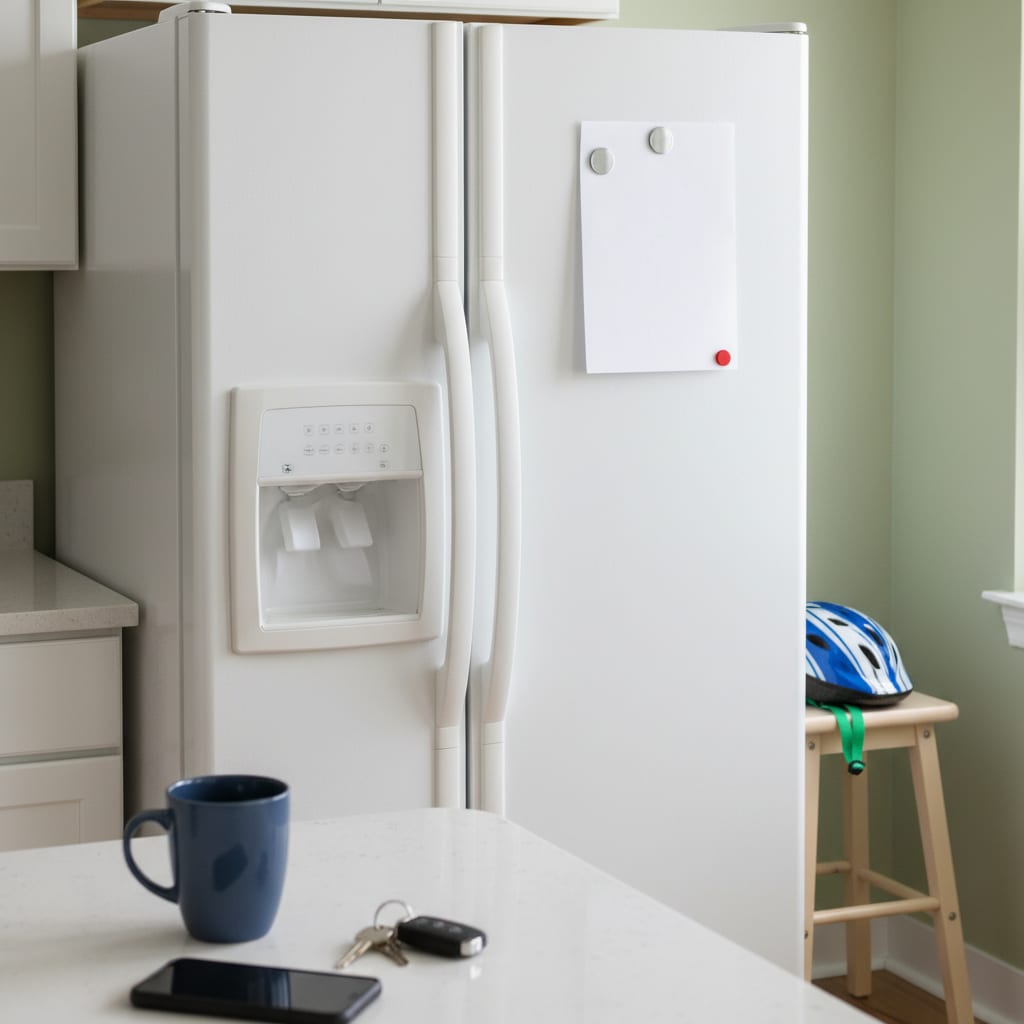
A street roster is one page that lists every household on your block with kids: house number, parents’ first names, cell numbers, kids’ first names and ages, and one line for anything urgent (a severe allergy, a dog that shouldn’t be approached, a shift worker who sleeps days). You build it by asking each family directly for permission, you keep it to the smallest set of facts that solves a problem, and it lives on the fridge and as a photo in your phone. It takes about an hour of doorbell work to create and it pays for itself the first time a kid isn’t where you thought.
What the page is actually for
Three situations, all of which arrive without warning:
- A kid isn’t where they said. Your nine-year-old was going to be at the Petersons’, and isn’t. Without a roster you’re guessing at doorbells; with one you make two calls.
- A pickup falls through. Car won’t start, meeting runs long, a bus arrives early. The backup adult on your street is only useful if you can reach them in under a minute.
- Something’s happening on the block. A water main, a lost dog, a downed limb, a kid on a bike who needs their parents. The person who has the numbers is the person who can act.
Notice what the roster is not: a directory, a mailing list, or a database of your neighbors. It’s a small operational tool for the households that opt into it, and treating it as anything larger is exactly how it stops being welcome.
The columns (and the ones to leave off)
Keep the sheet to seven columns so it fits on one page in a readable size:
| Column | Why it’s there |
|---|---|
| House number | The only address detail anyone needs |
| Parents’ first names | So the kids can use them, and so the sheet is readable at a glance |
| Best cell (one per adult) | The number they actually answer, not the landline |
| Kids’ first names + ages | Turns “the boy at 14” into a person your kid can look for |
| Bus stop / school | Groups the morning crowd instantly |
| Urgent note (one line) | Allergy, medical, dog, night-shift sleeper — only if the family volunteered it |
| Okay to knock? | Yes / text first — the single kindest column on the page |
Leave off: work addresses, employers, kids’ schools by name if the family didn’t offer it, school photos, anything about custody or family structure, and anything medical the household didn’t explicitly ask you to include. If you find yourself adding a column because it’s interesting, delete the column.
How to ask without being the strange one
The ask lands well when it’s specific, small, and clearly opt-in. What works, in three sentences at the door or at the stop:
“A few of us on the street are putting together a one-page list of parents’ cell numbers — just so we can reach each other for pickups and if a kid’s not where they should be. Want to be on it? Totally fine if not, and I won’t put anything on there you don’t give me.”
Then honor the “no” instantly and cheerfully, and never mention it again. One awkward “no thanks” costs nothing; one neighbor who feels their information moved without consent costs the whole project.
Where to collect:
- The bus stop, first week of school. The highest-density parent gathering of the year, and everyone’s already talking about logistics.
- A block party. If your street runs one, put a clipboard on the drinks table and let people opt in in their own handwriting.
- Door to door, in a single evening. An hour on a weeknight in early September gets most of a street. Bring your own numbers already filled in so people can see exactly what they’re joining.
- At a handoff. Every playdate and pickup is a legitimate reason to swap numbers with a family you didn’t have — take the guest parent’s number at drop-off as a matter of course.
The privacy rules (non-negotiable, or the roster dies)
- Consent per household, per fact. They give you the number; you don’t get it from somewhere else and confirm it later.
- Never publish it anywhere searchable. Not a public group, not a shared drive link, not an app, not a neighborhood site. Paper and a phone photo.
- Never forward another family’s number without asking. “Let me check with her and have her text you” takes ten seconds and is the difference between a trusted neighbor and a leak.
- Kids’ information stays minimal. First name and age. No last names, no photos, no schedules.
- Anyone can leave, immediately, without explaining. Say that when you ask, and mean it.
- Don’t repurpose it. A roster built for safety and pickups is not a distribution list for fundraisers, invitations, or a political flyer. The first time it’s used for something else, half the street quietly stops updating it.
Where it lives, and how it stays true
Print two copies. One goes on the inside of a kitchen cabinet door or on the fridge next to the family info sheet — somewhere a sitter or a grandparent will find it without asking. The second goes in the car’s glove box, because half the pickup problems happen away from the house.
Then photograph it and keep the photo in a favorites album on your phone. A photo works with no signal, no app, and no battery-hungry lookup, and it’s the version you’ll actually use at 3:40 in a parking lot.
Refresh it once a year, in the first two weeks of school, and treat the refresh as its own small ritual: new families added (the ones you brought a welcome card to in June), movers removed, ages bumped, dead numbers pruned. A roster that’s two years stale is worse than none, because you’ll trust a number that stopped working in April.
Start with four households, not thirty
The failure mode is trying to canvass an entire subdivision on the first pass. Start with the four doors closest to yours — the same four that anchor the first-thirty-days playbook — and let it grow from there when someone asks to be added. Four households is enough to solve a missed pickup. Thirty is a project, and projects don’t get finished in September.
FAQ: neighborhood parent contact lists
What information should be on a neighborhood parent contact list?
House number, parents’ first names, one reliable cell per adult, kids’ first names and ages, the bus stop or school, one line for anything urgent the family volunteered, and whether they’d rather be texted than knocked on. Nothing else — no employers, no last names for kids, nothing medical the household didn’t offer.
How do I ask neighbors for their phone numbers without being awkward?
Give the reason and the limit in the same breath: a one-page list, for pickups and for reaching each other about the kids, opt-in, and nothing on it they didn’t hand you. Ask at the bus stop or the block party where the context is already logistical, and accept a no without a follow-up.
Is it safe to keep a list of neighbors’ phone numbers?
It is if you keep it small and offline. Collect only what each household consents to, keep it on paper plus a photo in your own phone, never post it anywhere searchable or shareable, never forward a number without asking first, and remove anyone the moment they ask.
How often should the street roster be updated?
Once a year, in the first two weeks of school, plus whenever a family moves in or out. Bump the kids’ ages, prune dead numbers, and reprint. A stale roster is dangerous precisely because you’ll trust it.