The New-Neighbor Welcome: What to Bring (and Skip)
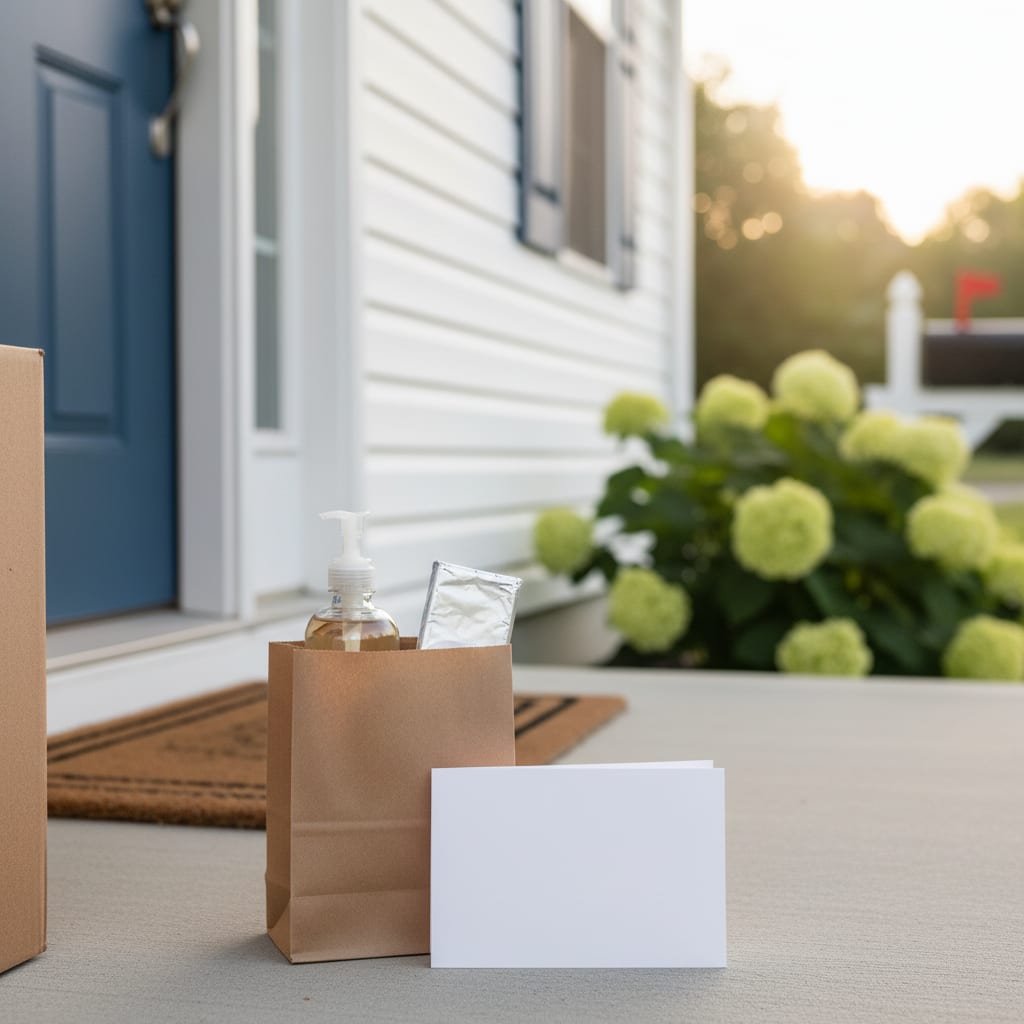
The best welcome-to-the-neighborhood gift is small, consumable, and delivered with two pieces of paper: your name and cell number, and a short list of local intel — trash day, the good pizza, which way the bus goes. That’s the whole formula. The gift is not the point; the gift is the reason you’re standing on their porch, and the information is what they’ll still be using in October. Bring it within the first two weeks, keep the visit under ten minutes, and never hand over anything that has to be returned.
Why the basket is a delivery vehicle, not a present
A family that moved in last Thursday is living inside a logistics emergency. They cannot find the coffee filters. They do not know when recycling goes out, whether the town wants a sticker on the bin, or which of the three elementary schools their address actually feeds. What they need is not decor. What they need is a person on the street who has answered a question for them, because that’s the person they’ll text next time.
So the object you carry is a pretext, and it should be chosen accordingly: cheap enough not to create a debt, useful enough to get opened this week, and small enough that it doesn’t need a home in a house full of boxes. Everything below follows from that.
The bring list (four items, one of them optional)
1. One consumable that gets used during move-in week. Good coffee, a box of tea, a decent bar of chocolate, a six-pack of something cold. My personal default is hand soap, because every mover discovers on day one that the soap is in a box labelled “kitchen misc” and there are seventeen boxes labelled “kitchen misc.” A bottle of Mrs. Meyer’s Clean Day hand soap costs about what a card costs, gets used within the hour, and leaves nothing behind to store. If you bring food, put allergen information on it in plain words — “contains peanuts, made in a house with a cat” — and use a disposable container.
2. A card with your name, house number, and cell. Handwritten, one line each. This is the actual gift. A new family will not remember which house the nice person with the dog came from, but they will keep a card with a phone number on it, and three weeks later when their kid is locked out, you’re the number they have.
3. A short intel sheet. Half a page, six bullets, no design effort:
- Trash and recycling days, plus anything weird about the town’s rules
- Which school their street feeds and where the bus stop is
- The two takeout places that are actually good
- The urgent care versus the ER, and the pediatric practice that takes new patients
- Who plows, who mows, who fixes the thing everyone’s boiler does
- The street’s communication channel — the text thread, the group, the app, whichever one people actually read
That last bullet is the one nobody thinks to include and the one every new family asks about eventually. If you want the whole four-week version of this, it’s the same intel a new family should be collecting for themselves in their first thirty days.
4. Optional: one kid-shaped fact. If you’ve seen kid gear come off the truck, add the ages on your street. “There are two girls at 14 and a boy about eight at 21.” A new kid at a new school in August is carrying more than the parents are, and the fastest fix is a name to look for at the bus stop. If your street keeps a parent roster, mention it exists and offer to add them — do not hand over other people’s numbers without asking them first.
The skip list
Well-meant, and still wrong:
- Anything in a dish you want back. You’ve now scheduled a second interaction that they have to manage, in a week when they can’t find their shoes. Disposable or nothing.
- Candles, diffusers, scented anything. You’re picking a smell for a house you’ve never been inside. Half of people love it, half are allergic to it, and all of it becomes a re-gift.
- Houseplants. A living thing with care instructions, delivered to people whose entire life is currently in cardboard.
- A full-size gift basket. Ribbon, cellophane, a wicker basket that has to live somewhere forever. The bigger the gift, the bigger the obligation you’ve handed them — which is the opposite of a welcome.
- Hot food with no notice. A casserole at 6pm on a moving day is either a rescue or an ambush, and you can’t tell which from the sidewalk. Text first if you know their number; otherwise bring shelf-stable.
- A long visit. The ten-minute rule is a kindness. Say who you are, hand it over, offer one specific help (“we’re at 18, knock if you need a wifi hotspot or a ladder”), and go.
- The immediate invitation to everything. Save the block party recruitment for round two. If your street runs one, mention the date and leave it there — the six-week planning cycle has plenty of room for them next spring.
Timing, and who should go
Go within the first two weeks, in the early evening on a weekday or late morning on a weekend — not during the truck, not at dinner, not at 8am. Bring one kid if you have one who’s roughly the age of theirs; two adults and four kids at the door is a delegation, not a welcome.
If you knock and it’s clearly a bad moment, leave the bag on the porch with the card and don’t hover. If nobody’s home, same. The card does the work whether or not you get a conversation, which is exactly why the card is the part you can’t skip.
What happens next (the part everyone drops)
Roughly two weeks later, do one more small thing: a wave that turns into a two-minute driveway conversation, an invitation to walk to the bus stop together, a “we’re heading to the pool Saturday if your kids want to come.” One follow-up converts a nice gesture into an actual neighbor. Zero follow-ups leaves them exactly where they started, holding a card.
That’s the entire ask — one porch visit and one follow-up. I’ve been the new family twice and the welcoming family more times than that, and the difference between a street that feels like a street and one that’s just addresses is a small number of people willing to go first, on purpose, within a month.
FAQ: welcome-to-the-neighborhood gifts
What’s a good welcome-to-the-neighborhood gift?
Something small and consumable — coffee, chocolate, hand soap, a cold six-pack — handed over with a card that has your name, house number, and cell phone number on it. Add a half-page of local logistics (trash day, school and bus, good takeout, urgent care) and you’ve given them the two things they actually need in week one.
How much should you spend on a new-neighbor gift?
Enough to be thoughtful, little enough to create no obligation — roughly the cost of a nice card and a coffee. An expensive gift makes the new family feel they owe you something, which is the opposite of the effect you’re going for.
Should I bring food to new neighbors?
Only if it’s shelf-stable or you’ve texted first, always in a container you don’t want back, and always with plain-language allergen information. A moving-day kitchen has no fridge space and no clean dishes, and a warm casserole at 6pm can land as one more thing to manage.
When is it too late to welcome a new neighbor?
It isn’t, but the easy window is the first two weeks — after that, the street has finished forming its impression and everyone’s back on their own schedule. If you’ve missed it by a month, skip the gift and just introduce yourself at the mailbox with your number. The information is the part that matters.