How to Plan a Block Party: The 6-Week Checklist
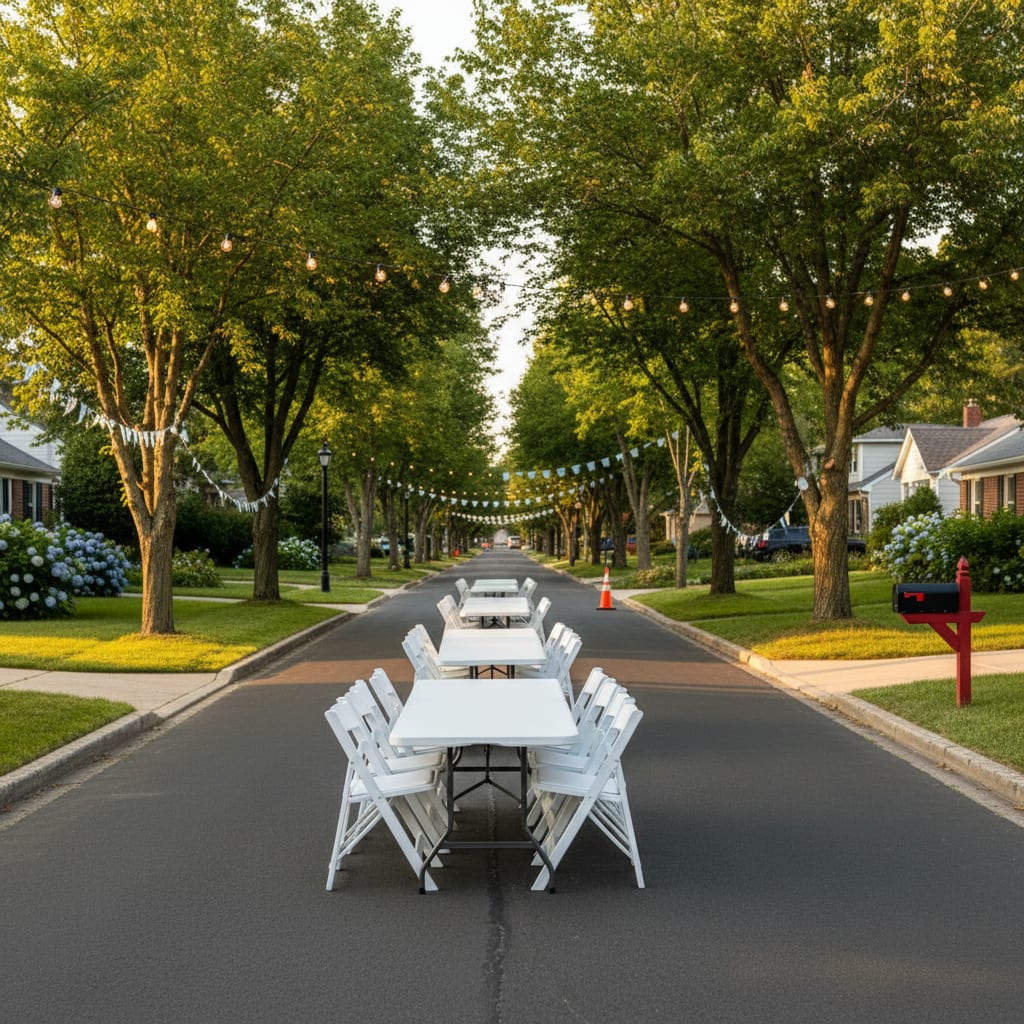
Planning a block party takes six weeks, one street-closure permit, and a core crew of three households — and that last item is the one that decides everything. One family planning a block party is a hostage situation; three families splitting permits, logistics, and communications is a committee small enough to text. Work backwards from your date through the checklist below and the party plans itself in about an hour a week. I’ve helped run four of these now, and the difference between the joyful ones and the grim ones was never the budget. It was whether the organizer got to attend.
Week 6: the date, the crew, the permit
- Recruit the core crew first — you plus two households. Split the load three ways: permits & street logistics, sign-ups & supplies, communications. (If you’ve done a team-mom season, this is the same job with better food and no referees.)
- Call your city or town hall about a street-closure permit. Most municipalities have a standard block-party process — some free, some with a modest fee, some requiring a neighbor-signature sheet, and lead times vary wildly, which is why this is a week-6 call, not a week-2 one. Cul-de-sacs and HOA common areas may skip the permit entirely; ask anyway.
- Pick a rain date at the same time you pick the date. Announcing both up front costs nothing; scrambling to invent one by group text costs the party.
Week 4: the invitation sweep
Paper flyer to every single door — every door, including the house nobody knows, because a block party’s actual purpose is turning “the house nobody knows” into “the Andersons.” Include date, time, rain date, the street-closure hours, and one contact number. Then stand up the digital layer (a group text or whatever your street already uses) for coordination. The flyer is the invitation; the thread is the machinery. Doing it in that order matters — a party planned inside an existing group chat invites the group chat, not the block.
Week 3: the sign-up sheets
Three sheets, named slots, same discipline as any sign-up-sheet campaign: food coordination — the potluck grid (mains, sides, desserts, drinks, ice, and the crucial “paper goods” slot someone always forgets), where my job is the grid’s math — enough slots per category for the RSVP count — and what people cook is gloriously their business; setup/teardown shifts — six names for before, six for after, because “everyone will pitch in” is how two dads end up folding thirty tables at dusk; and gear lending — tables, canopies, coolers, cornhole, the neighbor’s rumored snow-cone machine. Post all three in the thread, bring paper versions to the mailbox cluster, and let named slots do their quiet work.
Week 2: the layout and the program
Sketch the street: food tables clustered mid-block (one location — split food stations halve the mingling, and mingling is the product), seating in shade clusters, a kid zone visible from the food, driveways kept clear per your permit’s rules. Program-wise, a block party needs almost nothing: an official start, a food hour, and one all-ages anchor — bikes-and-chalk, a water-balloon window, a bring-your-own-lawn-game sprawl. If your street wants a fuller kid-activity roster, the party-content specialists at Just Motherhood have games lists for days; borrow theirs and spend your planning hours on logistics, which is the part that can actually fail.
Week 1: confirmations and the rain call
Confirm the permit arrived (physically in hand — this is a front-office rule about all documents), send the one-week reminder with the food grid’s remaining holes, and agree on the rain-call protocol: who decides, by what hour, announced where. A 10am decision for a 4pm party, posted once in the thread, beats a rolling all-day debate. Assemble the day-of kit into one labeled bin: tape, markers, trash bags, a first-aid kit like the Band-Aid Travel Ready kit, the sign-up printouts, and the extension cord that answers someone’s speaker question.
Party day: run it like a launch, then land
Setup shift at T-minus-2 hours per the sheet, barricades or cones out the minute the permit window opens, food tables live at the official start. Then — this is the actual checklist item — put down the clipboard. The system you built over six weeks runs itself from here: the sheets staffed the shifts, the grid fed the tables, the crew shares the pager. Your remaining job is the one the whole checklist was protecting: standing in your own street, plate in hand, learning which neighbor owns the snow-cone machine. Teardown shift closes it out, and the after-party group text — photos, thank-yous, and “same weekend next year?” — is how annual traditions are born. Next year’s party plans itself off this year’s sheets; keep the file.
FAQ: block party planning
Do you need a permit for a block party?
If you’re closing or restricting a public street, almost always yes — cities run standard block-party permit processes with fees and lead times that vary by town, so call yours six weeks out. Private cul-de-sacs, HOA commons, and parties kept to yards and sidewalks often don’t need one, but a two-minute call beats an afternoon visit from a patrol car.
How much does a block party cost?
Potluck-model parties keep shared costs down to the permit fee and incidentals like ice, paper goods, and tape — typically split across the core crew or covered by a small optional per-family chip-in. The sign-up grid is what keeps it cheap: borrowed tables and shared dishes replace rentals and catering.
How do you get neighbors to actually show up?
Paper flyer to every door (not just the group chat), a personal knock for the households nobody knows, and named sign-up slots that convert attendees into stakeholders. People show up to parties they’re carrying a dessert to.
What’s the best time for a block party?
Late afternoon into early evening — a 4-to-8 window — catches nappers, sports schedules, and grill hours, and the street empties naturally at kid bedtime. Check your permit’s allowed hours first; they’re often stricter than your street’s stamina.