Team Mom Duties: The Complete Season Checklist
The team mom (or team manager — the job outlasts the gendered title) runs everything about a youth sports team that isn’t coaching: communications, the roster and paperwork, the schedule pipeline, sign-up sheets, and end-of-season logistics. The coach owns the field; you own the flow of information between the field and thirty adults who don’t read their email. Done with a system, it’s a genuinely satisfying job measured in about an hour a week. Done by vibes, it’s a second phone that never stops buzzing. The difference is a binder, five checklists, and the willingness to send the same reminder twice without editorializing.
The job, decomposed
- Communications hub. One channel (whatever app the league uses, or a group text), one voice, one format: what, when, where, what to bring. You are a broadcast service, not a discussion forum — resist the urge to moderate the thread’s opinions about refereeing.
- Roster & paperwork. Contact list, medical forms, emergency contacts, jersey sizes — collected once at the season’s start, carried to every game, because the day someone needs the allergy form is not a day for searching inboxes.
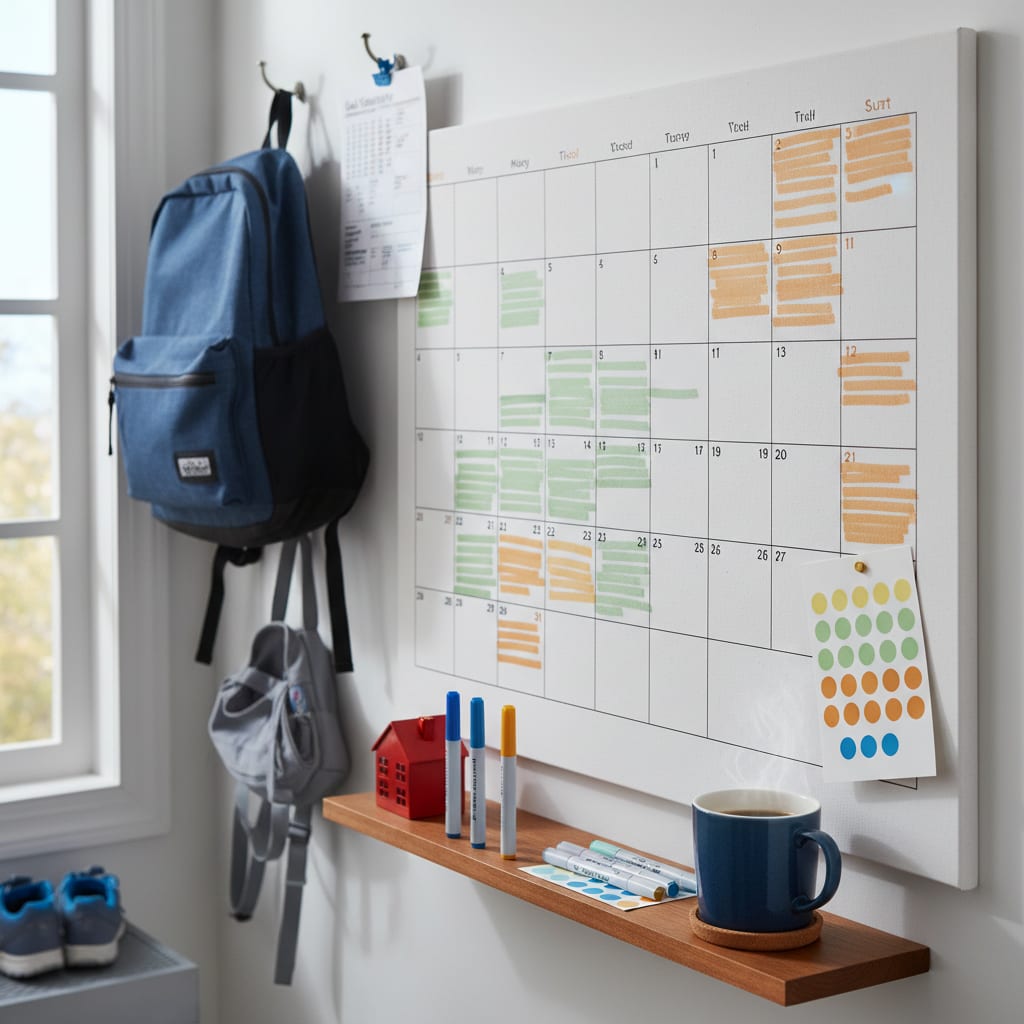
- The schedule pipeline. Games and changes flow from league to parents fast, because every hour a field change sits in your inbox is an hour some family plans around the wrong field. (Getting it onto your own wall is its own discipline — that’s the schedule merge.)
- Sign-up sheets. Snack weeks, scorekeeping shifts, carpool legs, end-of-season contributions. Sheets, not vibes — details below, because this is where team-mom tenures go to die.
- End-of-season logistics. Trophies or medals ordered by mid-season, the coach’s gift collection, the team roster of thank-yous. The party itself — theme, games, cake — is a celebration project, and celebration people do it better; my job ends at the date, the headcount, and the collection envelope.
The team-mom binder (the whole system in one place)
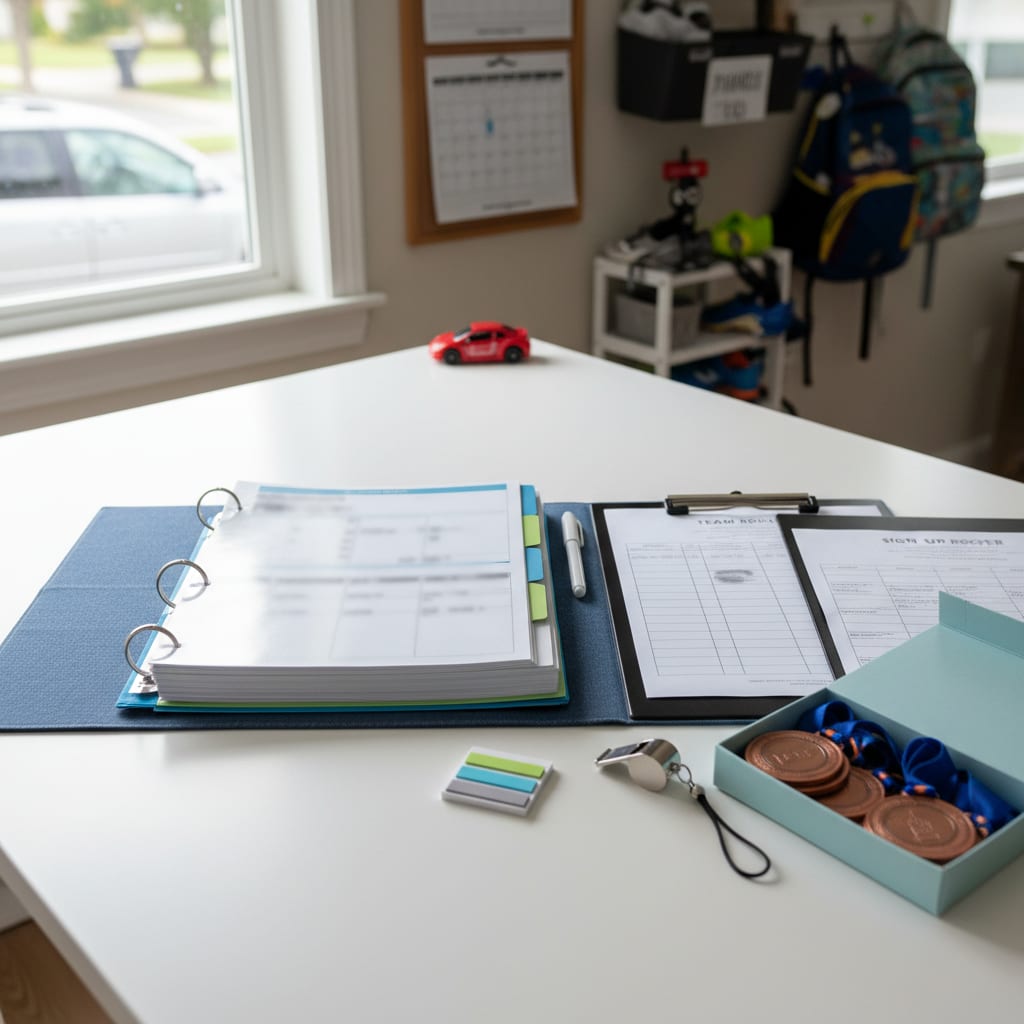
One binder, five tabs, lives in your game bag all season: Roster (contacts + medical, one page), Schedule (current version, plus field maps for the away games), Sign-ups (every sheet, current status), Money (who’s paid what — collected via the league app where possible, but tracked on paper where you can see it), and Season file (league rules, insurance info, the tournament packet). The binder’s real function is continuity: any given Saturday, a substitute adult could run team operations off it, which is exactly the standard front-office files are built to. Our printable binder kit — all five tabs, pre-formatted — ships free to the email list, right beside the weekly family run-sheet it feeds into.
Sign-up-sheet diplomacy: getting parents to actually volunteer
Eight seasons of data from the sign-up table:
- Named slots beat open asks. “We need help with snacks” recruits nobody; “Week 4 snack slot — one family, drinks and a snack for 14 kids” fills itself. Specificity is the entire technology. (What the snack should be is a food question — I run the grid, and the menu inspiration lives with the food bloggers.)
- Launch sheets at the season kickoff, in person, while goodwill is at its annual maximum. Digital sheet afterward for the stragglers, but the clipboard at the parent meeting does 70% of the filling.
- The reminder cadence is two: one a week out, one the day before, both cheerful, both identical in tone whether it’s the family’s first slot or their third miss. The team mom who audits enthusiasm becomes the team mom nobody signs up under.
- Rotate the invisible jobs. Everyone sees snack duty; nobody sees who carried the canopy. Put all the jobs on sheets — bench setup, scorekeeping, banner transport — or the same three families will quietly do them until they quietly stop.
Boundaries that keep the job one hour a week
Say yes to the role, and put a fence around it. You are not the team’s late-pickup childcare, not the referee-complaint department, not the mediator of playing-time grievances (that’s a parents-to-coach conversation, and you should visibly decline to carry it). The magic sentence, delivered warmly: “That’s a great question for Coach.” The other fence is at home — team-mom work happens in one weekly admin slot on your own family calendar, not in fifty micro-sessions at red lights. The role is a logistics job; schedule it like one, or it will schedule you.
FAQ: team mom duties
What does a team mom actually do?
Communications, roster and paperwork, schedule distribution, sign-up sheets, and end-of-season logistics — the operations side of the team, so the coach can coach. In hours: a setup burst at season start, then roughly an hour a week if you run it on systems.
What should a team mom send in the first email?
Five things: her role and contact info, the communication channel and its ground rules, the schedule (or when it’s coming), the paperwork asks with a deadline, and the sign-up sheets. One email, bulleted, sent within a week of the parent meeting while attention still exists.
How do you politely handle parents who never sign up?
Keep slots named and specific, keep reminders identical and judgment-free, and let the empty slot be visible to the group rather than privately chased. Most holdouts are disorganized, not selfish — the day-before reminder converts them. The truly immovable few: let it go; the season is short.
Team mom vs. team manager — is there a difference?
Same job, different jersey. Many leagues now use “team manager,” which accurately bills it as an operations role open to any parent. Whoever holds it, the binder transfers — that’s the point of running it as a system instead of a personality.