New to the Neighborhood: The First 30 Days
If you want to know how to meet your neighbors after a move, the honest answer is that you have to go first, and the first thirty days are when it’s easiest. Nobody is coming with a casserole anymore. What works is a short sequence: week one, meet the four doors closest to you; week two, gather the school and bus intel that only parents have; week three, get onto the street’s actual communication channel; week four, put yourself somewhere recurring. That’s it — four moves, roughly two hours total, and by day thirty you have names, numbers, and a bus stop you understand. Wait six months and the street will have politely finished forming around you.
Week one: the four doors
Skip the neighborhood-wide charm offensive. Meet four households: the two on either side of you and the two directly across. Those four are the ones who will collect your package, notice the garage door left open at midnight, and tell you which way the kids walk to the corner.
Go on a Saturday morning or a weekday around six, when people are outside anyway. Bring nothing — a gift raises the temperature and obliges them. Say your name, which house, how many kids and what ages, and then ask one useful question and leave inside four minutes. The four-minute exit is the whole technique; short first contact is what makes a second one easy.
The one question, chosen deliberately, should be something they can answer with pleasure and a bit of authority. Good ones: When does trash actually go out? Which way do the kids walk to the bus? Who do people use for lawn stuff around here? Every one of those gets you a real answer plus, usually, three unsolicited pieces of street intelligence you’d never have thought to ask for.
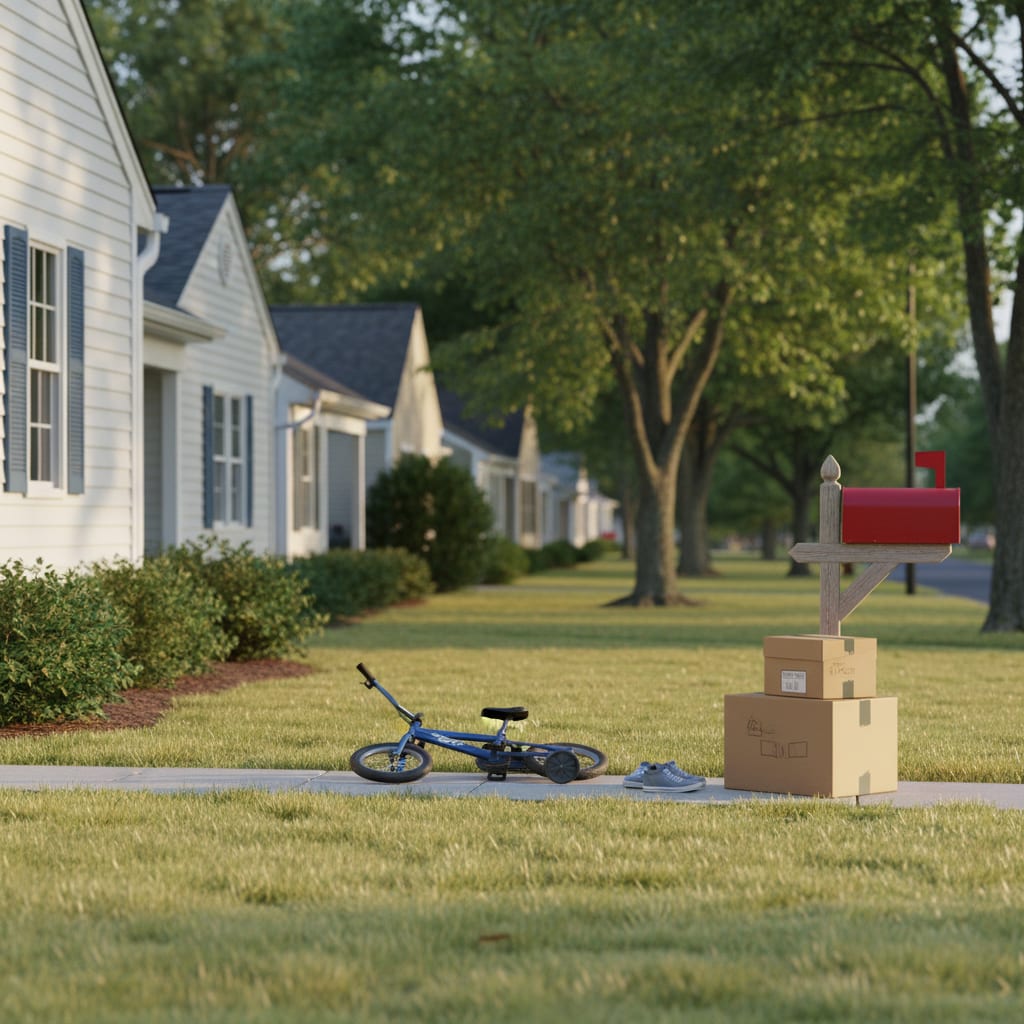
Kids are an enormous shortcut here and it’s fine to use them. A seven-year-old riding a bike up and down a new street will produce more introductions in one afternoon than an adult can generate in a month. Follow the bike. Say hi to whoever comes out.
Week two: school and bus intel
The official school communication tells you enrollment requirements and start times. The parent network tells you everything that actually shapes your mornings. Get these facts specifically, and get them from people, not from a website:
- Where the bus stop is and when the bus really comes — the posted time and the observed time are frequently different by several minutes, and every veteran family on your street knows the observed one.
- Whether a parent waits at the stop, and until what grade. This is a street-by-street norm, not a district rule, and getting it wrong in either direction is uncomfortable.
- What the rainy-day arrangement is — most streets have an informal one, usually a car parked at the corner with someone’s mom in it.
- How the pickup line works, which is a piece of highly local folklore with a learning curve.
- Who the room parent and the team parent are in your kid’s grade, because those two people know the year’s real calendar.
- The class group chat and how you get added. Ask directly; nobody minds.
Ask the front office two things too, since they’ll be answering anyway: which day the weekly folder or newsletter comes home, and whether there’s a formal buddy program for new students. Eight years working a middle-school front office taught me that the office staff know more about how a school actually runs than almost anyone, and that they’re delighted when a new parent asks a specific question instead of a vague one.
Week three: get on the channel
Every street runs on something — a neighborhood app, a Facebook group, an HOA email list, a text thread from the last block party, or a physical bulletin board at the pool. Find out which one and get on it, because that channel is where the snow-day carpools, the lost dog, the porch-pirate warnings, and the sign-up sheets live.
While you’re at it, start your own street sheet: a single page with the four doors’ names, their kids’ names and ages, phone numbers, and one line of relevant fact (has a pool, works nights, has the good ladder). Add to it as you meet people. This sounds like an unusual amount of bookkeeping until the first time you need to know which neighbor is home at 2pm.
That page pairs naturally with the household one — the family info sheet that a sitter or a grandparent can read cold. New street, new emergency contacts; a neighbor’s number belongs on that sheet within the first month, and having someone to put there is itself a reason to do week one properly.
Week four: put yourself somewhere recurring
One-time meetings decay. What builds an actual neighborhood relationship is recurring proximity — being reliably in the same place as the same people. Pick one and commit for the season: walk at the same time each evening, take the kids to the same park on Saturday morning, stand at the bus stop for the first few weeks even if your kid doesn’t need you to, or volunteer for one small school job with a fixed schedule.
The bus stop deserves special mention. For the first month it is the highest-yield ten minutes of the day: the same six adults, every morning, with nothing to do but talk. More carpool arrangements begin there than anywhere else on a suburban street.
Then, once you’ve got names, host something structurally small — a driveway hour with a folding table, drinks in a cooler, and an end time. The end time is what makes people come. That’s also the seed of the bigger thing: the block party playbook is the full version if your street doesn’t already have one, and running it as a newcomer works better than you’d expect, because the person who organizes is the person everybody meets.
Playdates will start arriving around the same time, and a new street is exactly where the unwritten rules bite hardest — who stays, who drops, how allergies get asked about. The playdate ground rules are worth reading before the first invitation, not after.
The 30-day plan on one page
| Week | Move | Time cost |
|---|---|---|
| 1 | Four doors, four minutes each, one useful question | ~30 min |
| 2 | School office questions + bus-stop norms from parents | ~45 min |
| 3 | Join the street’s channel; start the street sheet | ~20 min |
| 4 | Pick one recurring place; be there weekly | ongoing |
Two things to skip, because they cost energy and return little: introducing yourself to the whole street at once, and waiting for an invitation. Streets are not unfriendly, they’re just fully booked, and a family that goes first gets folded in fast.
FAQ: meeting neighbors after a move
How do you meet your neighbors after moving in?
Start with the four households closest to you — both sides and directly across — with a four-minute doorstep introduction and one specific local question. Then get onto whatever channel the street already uses, and place yourself somewhere recurring like the bus stop or an evening walk. Short repeated contact beats one long introduction.
Should you bring a gift when meeting new neighbors?
Not when you’re the one who just moved in. Arriving empty-handed keeps the interaction light and un-obligating, which is exactly what you want for a first contact. Save the gift for the reverse situation, when someone new moves onto your street.
How do you find out about the school bus stop in a new neighborhood?
Ask neighbors with kids rather than relying only on the district’s posted schedule — the observed pickup time, whether parents wait at the stop and until what grade, and the rainy-day arrangement are all street-level norms that no official page publishes. The front office can confirm the route and the weekly-folder day.
How long does it take to feel settled in a new neighborhood?
Names and a functioning bus-stop routine come inside a month if you go first. The deeper part — the carpool you can call in a crisis, the neighbor with a spare key — usually takes a full school year of recurring contact, which is why the recurring-place habit in week four matters more than any single introduction.