Playdate Etiquette: The Unwritten Rules, Written Down
Playdate etiquette runs on five unwritten rules, and here they are, written: confirm the details like it’s an appointment (date, time, address, end time); stay with your kid until roughly kindergarten age, then follow the host’s drop-off lead; volunteer allergies and quirks before being asked; be surgically on time for pickup; and reciprocate within a few weeks — with an invitation, not a gift. Everything else is regional dialect. The reason playdates feel socially radioactive is that two families are always running two slightly different rulebooks; the fix, as with most things on this site, is treating the invisible schedule as the real one.
The ask: making the invitation land
The vague “we should get the kids together sometime!” is the playdate that never happens — it’s a warm feeling, not a proposal. The invitation that converts is one specific offer with an exit built in: “Would Maya like to come over Friday after school, 3:30 to 5?” A stated end time isn’t cold; it’s a gift — the other parent can accept without wondering if they’re signing up for an open-ended evening, and nobody has to invent a dentist. Text is the correct channel (school pickup is the correct backup), and one reschedule is normal life with kids while three consecutive reschedules is an answer — accept it gracefully and redirect the energy to a family whose calendar wants yours. If the logistics thicken — siblings, driving, a handoff from after-school routine to somebody’s minivan — write the plan down in the thread like the tiny operations order it is.
Drop-off or stay? The age math
The default: parents stay through the preschool years, and drop-off becomes normal somewhere around kindergarten to first grade — but the host sets the mode, and the guest follows. Hosting and want the drop-off? Say it in the invitation (“happy to have her solo — I’ll text when we’re wrapping up”). Guesting and unsure? Ask straight: “Is this a drop-off, or should I plan to hang around?” — a question that reads as considerate, not clueless. First playdate with a family you’ve just met, many parents stay regardless of age, and that’s not distrust; it’s how the two rulebooks get compared over coffee. The handoff information for a drop-off is a four-line text: your cell, pickup time, any medical/food notes, and who else might collect your kid. (Front-office habit: the school never releases a kid to an unlisted adult, and honestly the school is right.)
The host’s rulebook
- Feed lightly, disclose fully. A snack is standard hosting; the contents are where etiquette lives — ask about allergies at confirmation (“anything he can’t or won’t eat?”) even if the guest should have volunteered it. What to actually serve is a food question, and the food bloggers have you covered; my lane is making sure the question got asked.
- State the house rules once, in front of both kids. Trampolines, scooters, which rooms are open, screens or no screens — thirty seconds at the door. Guest kids follow host rules; visiting parents can flag hard limits (“we skip the trampoline”) without negotiating your house policy.
- Screens are a disclosure item. “They watched a show” is a fine playdate and a terrible surprise. If screens are on the menu, mention it at invitation or at pickup — either is fine, silence is neither.
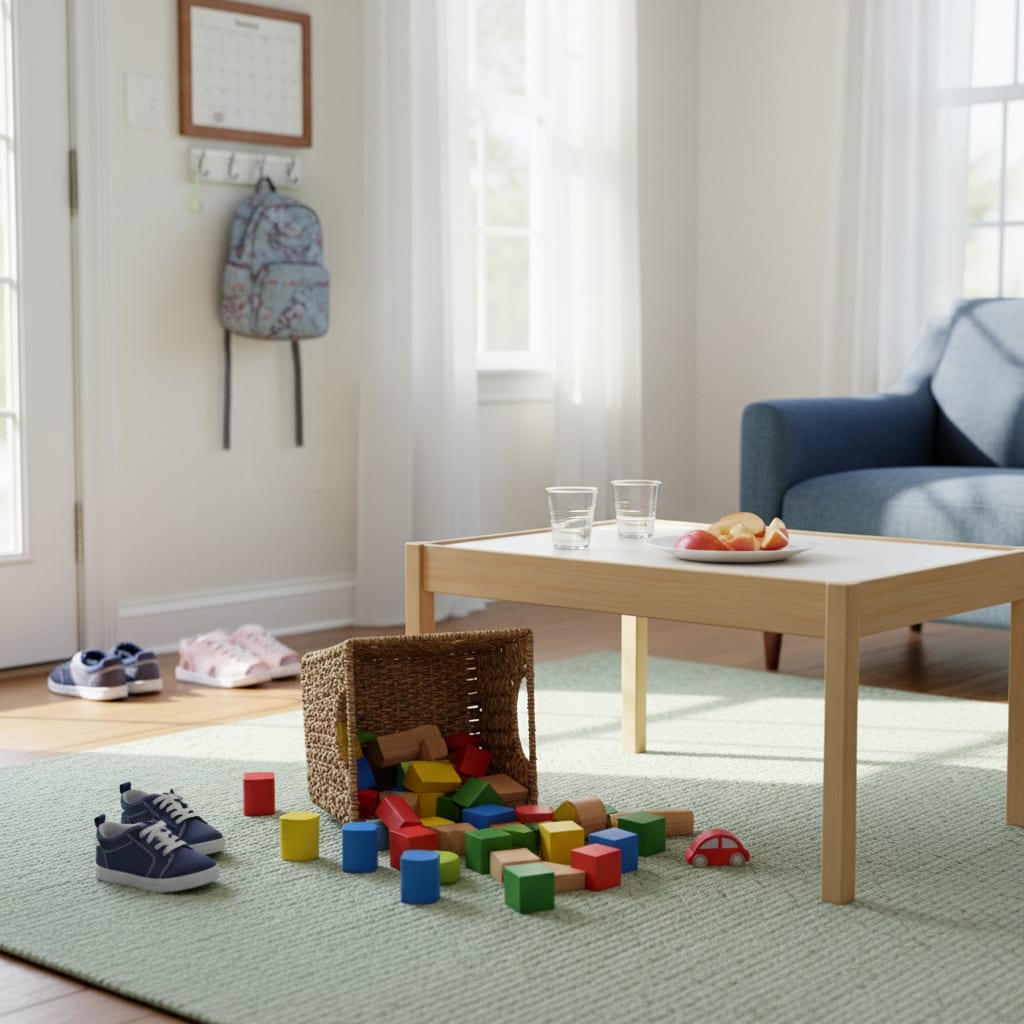
- Match the mess to the friendship. Full art-supply access is for veterans, not first visits. This is also the answer to hosting anxiety: a playdate is not a block party — nobody is grading your baseboards, and the kids will spend ninety minutes in one corner with a bin of the exact toys you almost apologized for.
Pickup, and the reciprocation ledger
Pickup time is a hard time. Fifteen minutes late without a text is the single fastest way to fall off a family’s invite list, because you’ve converted their favor into unpaid childcare with a smile on it. Arrive on time, execute the ten-minute goodbye protocol (announce, shoes, thank the host in front of your kid), and go. Then run the ledger: an invitation back within a few weeks keeps the account healthy — it doesn’t need to be equivalent (their craft afternoon can be your park meetup; hosting styles differ by house and by season), it needs to be initiated. Families notice a chronic one-way flow long before anyone says it out loud. And if your household genuinely can’t host this season, reciprocate in kind: offer the park, the library hour, or a leg of the pickup carpool. The currency is effort, not square footage.
FAQ: playdate etiquette
At what age are drop-off playdates okay?
Kindergarten to first grade is the common threshold, adjusted for the kids and how well the families know each other. The host proposes the mode; a first-time pairing often keeps a parent around regardless of age while the two rulebooks get acquainted.
How long should a playdate last?
Ninety minutes to two hours for elementary kids — long enough to get past warm-up, short enough to end before the meltdown window. State the end time in the invitation and honor it at pickup; the playdate that ends well is the playdate that repeats.
Should I send food or money with my kid?
Neither, for a standard after-school playdate — hosting includes a snack. Send instead: any allergy or medical notes (unprompted), a water bottle if it’s a park meetup, and your cell number. A thank-you text that evening settles the account in full.
What if the other family never reciprocates?
Give it a season and a couple of direct, easy-to-accept invitations before you conclude anything — some families are drowning, not aloof. If the flow stays one-way and your kid still loves the friend, downshift to lower-effort formats (park meetups, walk-home pairings) and let the friendship keep what the hosting ledger can’t fund.