Neighbor's Baby Crying Through the Wall at Bedtime
A neighbor’s baby crying through a shared wall is two problems stacked — a sound problem and an etiquette problem — and only one of them is yours to fix. Start on your side: move your child’s bed off the shared wall, put steady sound in your kid’s room, and shift lights-out ahead of whenever the crying usually lands. Then give it several weeks before you say anything at all. When you do, lead with what you’ve already done, never with a request.
The wall is doing exactly what walls do
In a townhouse, duplex or apartment, the bedrooms either side of a party wall are almost always mirrored. Builders stack quiet rooms against quiet rooms, which is sensible right up until one of them becomes a nursery. Then the nursery is nine inches from your seven-year-old’s headboard, and the two people who most need 7:30 to go smoothly are the closest to the wall.
It’s rarely just the wall. Sound gets in around it — the gap under the door, the shared attic space above the ceiling, electrical boxes cut back-to-back into one stud bay, and in September two open windows four feet apart. Same thing I ran into with a bed that thumps against the wall at bedtime: the problem is transmission, not volume. And an infant cry is built to be un-ignorable — that’s the entire point of it.
So the goal isn’t silence. It’s getting the sound below the level that wakes a sleeping child or stops a settling one.
The five moves on your side, in order
The first two are free and buy the most.
| Move | What it costs | What it buys |
|---|---|---|
| Pull the bed off the shared wall | An afternoon | The biggest single change — distance beats anything stuck to the wall |
| Swap which kid sleeps in that room | A weekend of negotiation | If one of yours sleeps through a smoke alarm, that’s your wall kid |
| Steady sound in your kid’s room | One machine, one outlet | Raises the floor so a cry isn’t a distinct event |
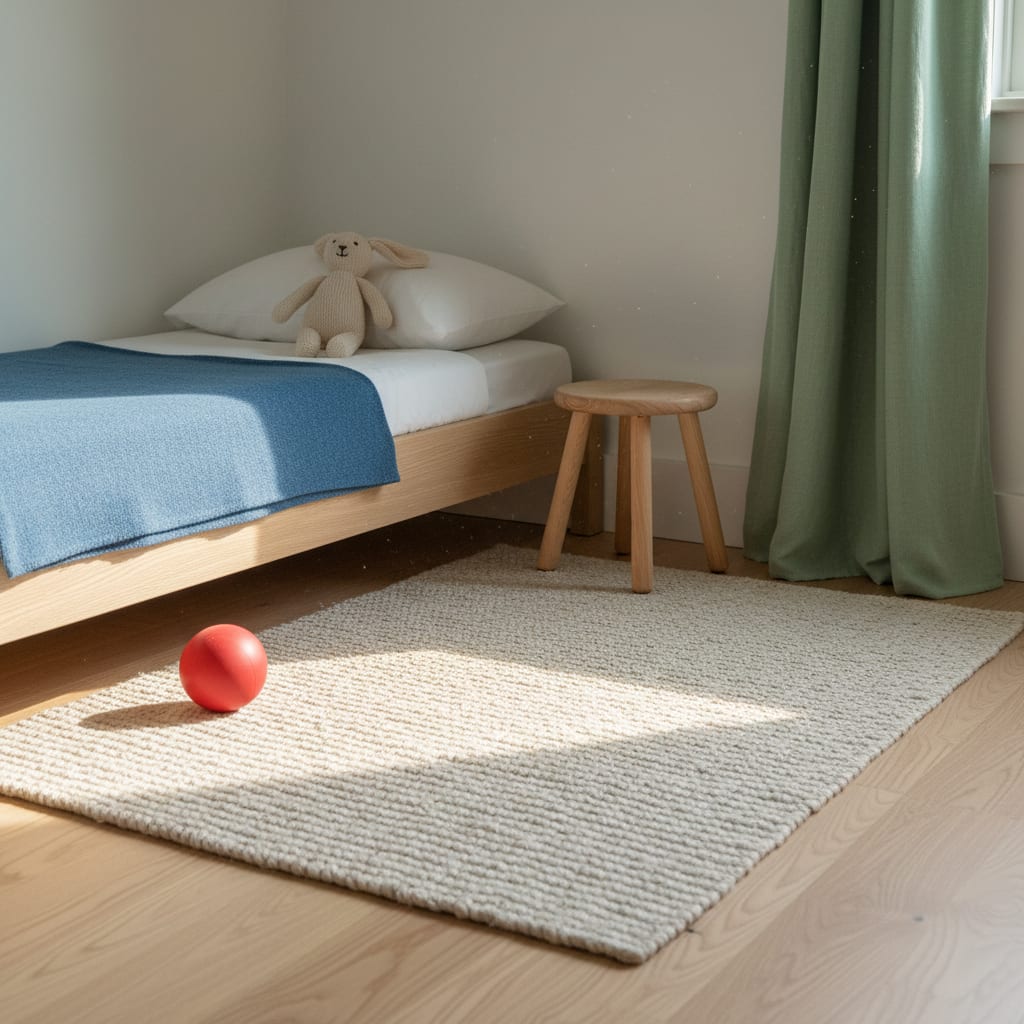
| A rug and a full-length curtain | Whatever you’d spend anyway | Soft surfaces stop the room amplifying what gets in |
| A door sweep and outlet gaskets | An hour, cheap | Real but marginal — do it last |
For the third one, a mechanical fan-style machine beats a phone app, because it makes a genuinely constant sound instead of a short loop your kid learns to hear the seam in. We run a Yogasleep Dohm on low, sitting between the bed and the shared wall rather than beside the pillow. Keep it quiet enough that you’d still hear a child call from the doorway; the job is masking, not drowning.
Skip foam panels sold as soundproofing: they’re made for echo inside a room, not for sound coming through a structure.
Get the timing before you get frustrated
You don’t need your neighbor’s schedule. You need two weeks of noticing when it lands, which takes four seconds a night.
A pattern usually shows up fast, and it’s normally one of three: an evening stretch between six and eight-thirty; one hard wake roughly half an hour after their baby goes down; or the small hours, which nobody can plan around. The middle one has a name — Betteroo calls it a false start bedtime — and it’s the one you can schedule around, because it’s predictable.
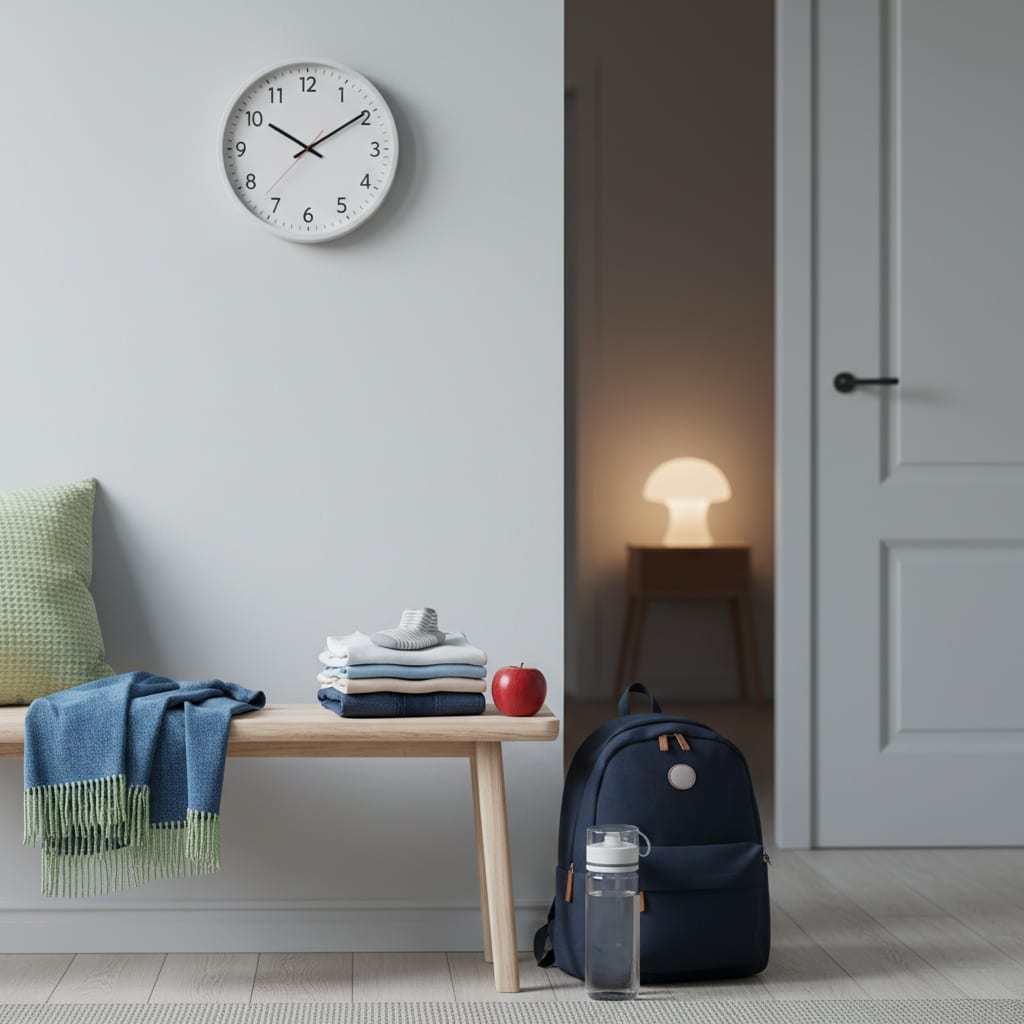
Once you know your window, move yours ahead of it. If the wall reliably goes off at 7:50, a 7:45 lights-out is a nightly argument and a 7:25 one isn’t, because a child already under is far harder to wake than one thirty seconds from it. That’s a fifteen-minute change to the run from homework to lights-out, not a rebuild — start the wind-down earlier and keep the sequence the same length.
Remember what it’s like on the other side
Whoever is holding that baby has heard it closer and longer than you have, and is almost certainly already mortified about the wall. A stretch of hourly waking is brutal to be inside of; Betteroo’s guide on why a baby wakes every hour and what lengthens the stretches is a fair read on how little of it is anybody’s fault, and it’s worth two minutes before you draft a sentence you can’t take back.
It isn’t a discipline problem, they aren’t ignoring it, and there’s no version of that house where somebody isn’t already awake.
The etiquette half, which is the harder half
This is a street you’ll live on for years. The sound is temporary; how you handled it isn’t.
Say nothing for the first couple of months after a baby arrives. Whatever you’d say in week three is a sentence they’ll remember in year six — and by month four you may not need it.
Never write a note. Signed or not, a note about a crying baby reads as a complaint however it’s worded, because there’s no face and no tone attached. Do this out loud, on a driveway, in daylight.
Lead with your side, and don’t attach an ask. The version that lands is a mention, not a request: “Totally fine, but I wanted to say it out loud so it’s not weird — our bedrooms back onto each other, so we hear the baby a bit at night. We’ve moved our kid’s bed and put a sound machine in, and it’s basically sorted. How are you all doing?”
That tells them you know, so they stop wondering; shows you took your own steps first, so it can’t read as a demand; and ends on a question about them.
| Lands well | Doesn’t |
|---|---|
| In person, in daylight | A note, a text, or the group chat |
| ”We hear it a little, we’ve sorted our side" | "We can hear everything” |
| Asking how they’re holding up | Asking what their plan for it is |
| Offering one specific hour of help | ”Let us know if you need anything” |
| Mentioning it once, ever | Following up on whether it’s improved |
If they’re new to the street, this goes better when you’ve already met properly — the when-they-move-in visit does more for a wall conversation eight months later than any amount of careful wording. And if you have no way to reach them short of knocking, a working list of the street’s numbers turns “I’d have to go over there” into a two-line text.
The one offer worth making is a specific hour — Saturday morning, you take the baby around the block in the stroller so somebody can sleep. Half the reason it’s worth making is that it fixes your problem too.
What I stopped doing
- Lying there timing it. Two weeks of noticing, then stop. After that you’re awake on purpose.
- Reading one bad night as the pattern. Teething, a cold, a growth stretch — a rough week is just a rough week.
- Explaining the wall to my kids as a problem. Mine took their cue from my face. Once I made it boring, it was boring.
- Waiting for them to raise it. They won’t — they’re braced for you to be angry.
- Escalating past a conversation. An HOA or landlord letter about a crying infant can’t be taken back, and won’t make the baby sleep.
FAQ: living next to a crying baby
How do I block a neighbor’s baby crying through the wall?
You mostly don’t — you reduce it. Move the bed away from the shared wall, add a rug and a full-length curtain, and run steady sound in your own child’s room so a cry stops standing out against silence.
Should I say something to my neighbors about the crying?
Not for the first couple of months, and never in writing. When you do, say it in person, mention what you’ve already changed on your side, and don’t attach a request — the goal is to stop them worrying, not to make them fix it.
How long does the night crying usually go on?
It changes shape rather than stopping on a date, and it goes backward during teeth and colds. On our street the evening stretch shortened noticeably over the first year. Plan your side as though it’ll be a while.
Which of my kids should sleep in the room on the shared wall?
Your heaviest sleeper, and it’s worth swapping rooms to make that true. A kid who sleeps through a thunderstorm barely registers a wall; a light sleeper is at your door twice a night whatever’s in the room.