Morning Light and Kids' Sleep: Use the Walk to School
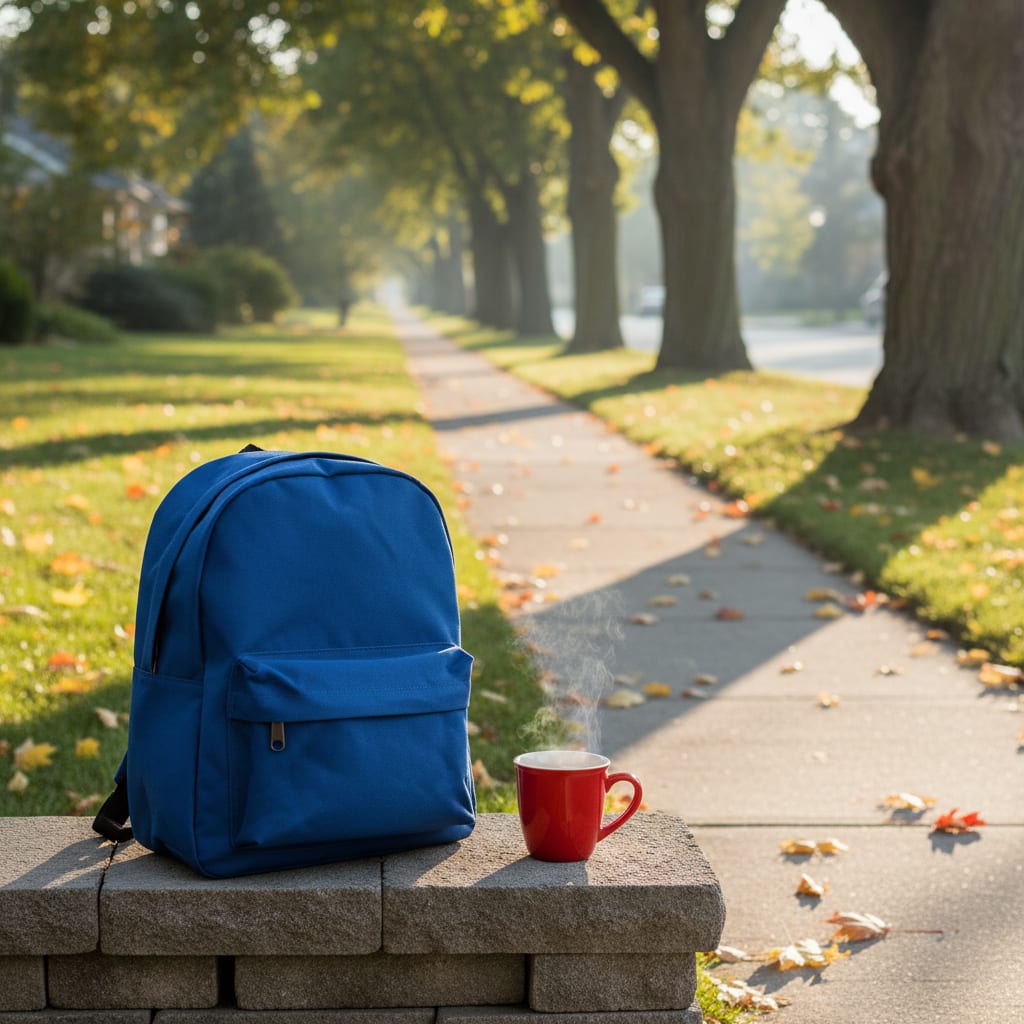
Morning daylight is one of the strongest signals a child’s body clock gets, and it helps evening sleepiness arrive on time. For a school-age family, the walk to school or the wait at the bus stop is ten to twenty minutes of outdoor light that is already on the calendar. So the job is logistics, not a new habit. Make sure that time happens outdoors and on foot, keep something like it on weekends, and dim the house after dinner so both ends of the day give the same answer.
Why the morning end of the day matters to bedtime
The mechanism is short, and it is the whole reason this post exists. The National Institutes of Health’s fact sheet on circadian rhythms says “light and dark have the biggest influence on circadian rhythms.” The brain’s master clock “controls production of the hormone melatonin based on the amount of light the eyes receive”, and in the evening it “tells their brain to make more melatonin, causing sleepiness.”
The AAP’s time-change article on HealthyChildren puts the parent version plainly: “Sunlight has a strong effect on the body’s circadian rhythm,” and spending time outside in natural light during the day can help reset a child’s internal clock after a time change. Betteroo’s pediatrician-reviewed guide on which lamp and bulb colors belong in the evening connects the two ends: “Morning daylight anchors the internal clock, which in turn helps melatonin rise on time in the evening.”
So a bedtime that keeps sliding is sometimes a morning problem. Light is one input among several, not a cure. But it is the one input the school run hands you for free.
What the school run already gives you
How much outdoor light a child gets before the bell depends almost entirely on how they get there.
| How they get to school | Outdoor time on a normal morning | The easy upgrade |
|---|---|---|
| Walk or bike | The whole route | Keep it on weekends too |
| Bus | The walk to the stop, plus the wait | Wait outside, not in the car |
| Car rider | A few steps from car to door | Park a block or two away and walk the end |
| Before-care drop | Almost none | Get the light at home before leaving |
The bottom two rows are where most of the gain is. A car-rider kid can go from a few seconds outdoors to five minutes with one change of parking spot. Check your school’s rules on where parents may stop before you pick one.
The light calendar: late October is a dark walk
Sunrise does not hold still through the school year, and the clock change makes it jump. Here are sunrise times for Chicago from the US Naval Observatory’s sun and moon data service, looked up on October 23, 2026:
| Date | Sunrise, Chicago | A 7:40 departure is… |
|---|---|---|
| Thu Oct 1, 2026 | 6:48 a.m. | Well after sunrise |
| Mon Oct 26, 2026 | 7:16 a.m. | Barely after sunrise |
| Mon Nov 2, 2026 (clocks back) | 6:24 a.m. | Over an hour after sunrise |
| Mon Dec 14, 2026 | 7:10 a.m. | Half an hour after sunrise |
| Mon Jan 4, 2027 | 7:18 a.m. | Barely after sunrise again |
Your town will differ, sometimes by a lot, so look up your own address on the same USNO page. The shape is similar wherever the clocks change, though. The last week of October is one of the dimmest walks of the fall. The clocks falling back on November 1 (the date is on NIST’s daylight saving page) makes the walk brighter overnight. Then it darkens again toward early January.
What that means on the calendar:
- This week and next: the walk may be in twilight. It still counts as getting outdoors, and it is the reason the dark-morning section below exists.
- November: the brightest school-run walks until spring. If you only change one thing, change it now, when the payoff is biggest.
- Mid-December to mid-January: the dark walks are back, alongside short afternoons. The weekend morning walk matters more in those weeks.
How the clock change itself moves a small child’s bedtime is covered in the clock-change and school-week post. This post is about the light either side of it.
Five ways to route more daylight into the morning
- Walk some of it. Even one or two days a week. A walking school bus shares the adult duty around the street, so walking does not mean every parent walks every day.
- Park and walk the last block. For car riders this is the cheapest change on the list. It also keeps you out of the slowest part of the drop-off line.
- Wait outside at the stop. The idling-car wait trades the morning’s light for warmth. Dress for the stop instead, and the bus-stop logistics stay the same.
- Give the youngest his own light. Our four-year-old rides along on drop-off and spends the walk from the car to the door looking at his boots. He gets breakfast at the brightest window and a turn around the yard while the big kids find their shoes.
- Keep a weekend version. A Saturday walk to the bakery or the dog’s first loop of the block at roughly the school-day time. A weekend with no morning light and a late wake-up is how Sunday bedtime ends up an hour late.
The evening has to agree
Bright mornings do less if the house stays bright until 8:45. The two ends of the day need to tell the same story.
The AAP’s time-change article says “blue light from phones, computers, tablets, TV and even nightlights may trick the brain into thinking that it’s daytime.” It recommends putting screens away at least an hour before bedtime and charging them outside the bedroom. The Betteroo light guide adds the household part: a gradual shift to warm, dim light in the last hour or two before bed.
On our run-sheet that is one line, lights down at 7:30. The overheads go off, the lamps go on and the chargers go to the kitchen, and it sits inside the school-night routine like any other step. For the youngest, the evening end is mostly arithmetic. Betteroo’s guide to preschooler sleep works bedtime out backward from the wake-up time. Morning light makes that bedtime easier to hit.
Dark mornings: the walk still happens, visibly
A twilight walk is still worth taking. It just needs to be seen. Reflective slap bands like these Cozihom reflective bands go on backpack straps and wrists in a second, so they actually get worn. Cross at the corners the route already uses. If you run a walking group, the count at every crossing matters more in November light than in September light.
 Bright mornings, easier evenings. Now get the bedtime right.
Betteroo builds a personalized, day-by-day sleep plan for children from newborn through age 6, so the youngest's bedtime fits the family's real school-week clock.
Take the free sleep quiz →
When the walk isn’t enough
Light helps a clock that is drifting. It does not fix everything, and I run a schedule, not a clinic. A child who lies awake a long time most school nights, snores or struggles to breathe at night, or is wiped out during the day despite a reasonable bedtime should see their pediatrician.
FAQ
Does morning sunlight help kids sleep at night? It helps the body clock run on time. The NIH says light and dark have the biggest influence on circadian rhythms, and the AAP says sunlight has a strong effect on a child’s internal clock. It is one input alongside a steady routine, not a cure.
How long should kids be outside in the morning? None of the sources here set a number of minutes. Treat the school-run walk or the bus-stop wait as the daily outdoor time, and keep a similar walk on weekends.
What if it is still dark on the walk to school? In many US towns the last week of October and the weeks around New Year are the darkest walks. The fall clock change on November 1, 2026 brightens mornings overnight. Look up your own sunrise on the US Naval Observatory’s data page, and add reflective gear for the dark weeks.
Should we skip the walk when it’s dark? No. Take it visibly, with reflective bands and the usual crossings, and use the weekend mornings to make up the daylight.