First Sleepover at a Friend's House: The Parent's Plan
A child is ready for a first sleepover at a friend’s house when they have already spent a night away from you without distress, can do their own bedtime, know the friend’s family well, and can ask another adult for help. Age matters less than those skills. Then run it like any other event on the calendar: one call with the host parent before you say yes, a packed bag with one familiar thing in it, a call-me-anytime plan with a pickup that works at any hour, and a quiet day after with an early bedtime. A child who comes home at 10:30pm hasn’t failed. That was part of the plan.
Is your child ready? Check skills, not age
There is no fixed sleepover age, and the sources don’t even agree on a ballpark. Understood’s sleepover-readiness checklist says “some kids might be ready around age 5 or 6. And others might not be comfortable until later.” The Sydney Children’s Hospitals Network’s page on sleeping away from home says some kids feel ready “around 8 to 10 years old, while others feel ready earlier.” Both say it depends on the child.
So use the skills on Understood’s checklist as the test:
| Readiness sign | What it looks like at home | If it’s not there yet |
|---|---|---|
| A night away already done | A night at a grandparent’s or aunt’s without tears | Do a relative’s house first |
| Bedtime without you | Teeth, pajamas and lights-out with no adult steps | Practice it at home for a few weeks |
| Knows the friend well | Several good playdates at that house | More daytime visits first |
| Hours apart without worry | A full afternoon at a friend’s goes fine | Build up with longer playdates |
| Can ask another adult for help | Will tell a coach or a friend’s parent what’s wrong | Rehearse the words (see below) |
| Wants to go | Excited, or at least willing to try | Wait. Never talk a child into this one |
Understood also suggests that a child who isn’t quite ready spend a night with a relative or neighbor a few times first. That’s a good step one.
The lateover: half a sleepover, all the fun
The AAP’s HealthyChildren site gives a name to the in-between option. In its questions to ask before a playdate, it suggests a “lateover” (sometimes called a “sleepunder”): pajamas, games or a movie, then home “when it’s time to sleep,” and it calls this “perfectly fine playdate etiquette.”
For a five- or six-year-old, a lateover is often the right first step. Pickup goes on the calendar for 8:30pm in pajamas, the child sleeps in their own bed, and next time the only thing you change is the pickup time.
The call to the host parent before you say yes
Ten minutes on the phone settles most of the worry. HealthyChildren’s playdate questions are the agenda. Here they are with the sleepover additions:
- Who will be home overnight? HealthyChildren says that for a sleepover it’s good to know “who will be in the home when your child is there, including other relatives or adults.”
- Are there guns in the house, and how are they stored? The same page says all guns “should be stored unloaded and locked up, with the ammunition locked up separately,” and that if you’re uncomfortable with the answer “you can offer to host the kids at your house instead.” Ask everyone the same way and it never sounds like an accusation.
- What’s the screen plan? Movie ratings and games differ by family. Say what yours are.
- Pool, trampoline, pets? All three are on the AAP list.
- What’s the evening plan, and when is lights-out? The SCHN page suggests telling the host your child’s usual bedtime and the habits that help them sleep.
Then give them your side: allergies, any medicine (hand it to the adult with written instructions, never to your child), your cell number, and the pickup time. The playdate etiquette rules on drop-off and reciprocation still apply. And if one day the sleepover is at your house with a baby asleep down the hall, there’s a separate plan for hosting a sleepover with a baby in the house.
What to pack for a first sleepover
The bag is a checklist, packed the afternoon before, with your child helping so they know where everything is:
- Bedding the host asked for. If it’s sleeping bags, a lightweight kids’ bag like the Coleman Kids 45°F sleeping bag rolls up small and goes in the washing machine afterward. Add their own pillow.
- One thing from home. The SCHN page lists “a favourite toy,” “a nightlight” and “a bedtime book.” Pick one. A familiar object does more at 11pm than you’d think.
- Pajamas, toothbrush, tomorrow’s clothes. Pack them in the order they’ll be used.
- A labeled bag for anything that matters. Medicine, glasses and a retainer go in one zip pouch, and the host adult gets told which pouch it is.
If your child still wets the bed sometimes, tell the host parent quietly. Pack whatever your child uses at home in a plain bag, and agree a private plan with your child. KidsHealth’s page on bedwetting says kids can feel “anxious about spending the night at a friend’s house,” and that if bedwetting is “keeping your child from activities like sleepovers or camp,” the doctor can help. That’s a pediatrician conversation, not a reason to skip the sleepover forever.
The call-me-anytime plan
This is the part that makes the first sleepover work. Before drop-off, agree three things with your child:
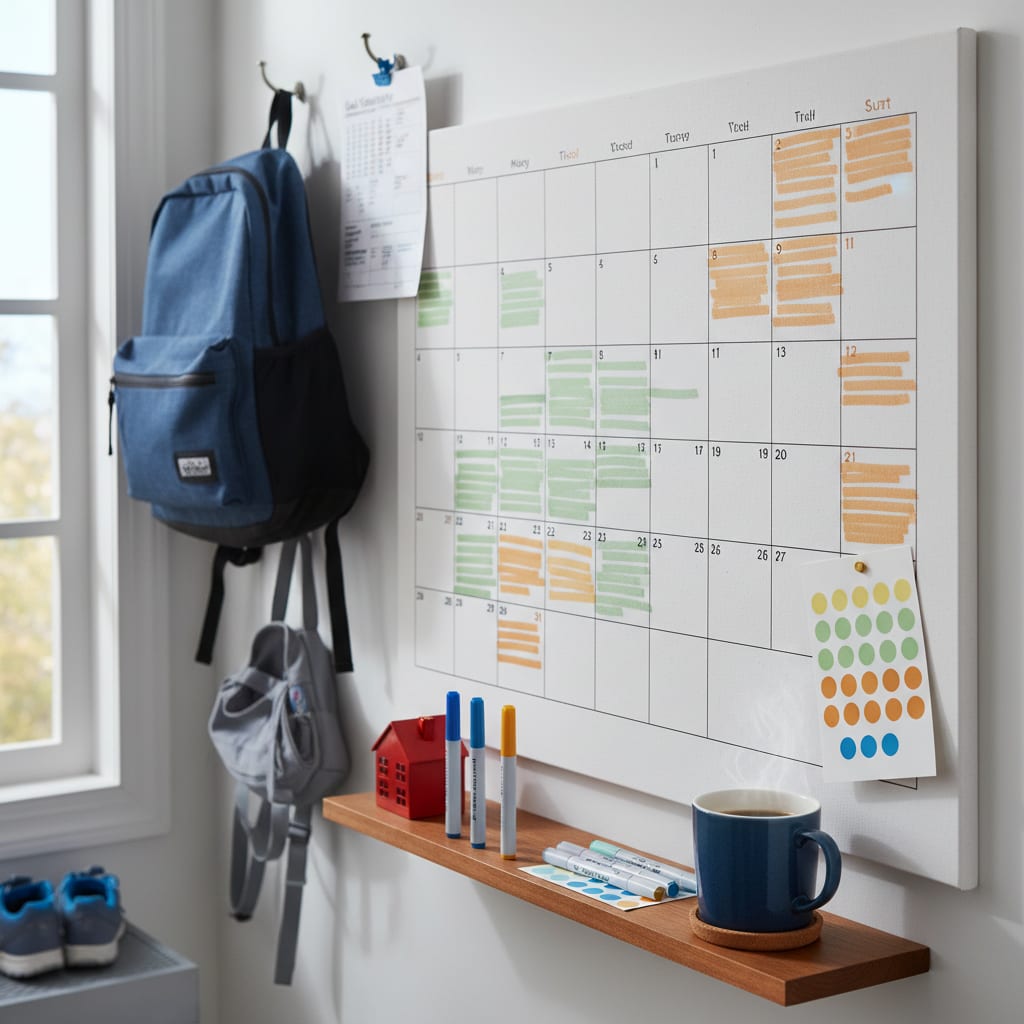
- They can call at any hour, and you will come. Not “if it’s really bad.” Any hour, any reason. A phone that is on, a car that isn’t blocked in, and an adult at home who can drive. Put it on the family calendar so nobody plans a late night out that evening.
- A goodnight call if they want one. The SCHN page suggests planning “a quick phone call before bed.” Keep it short and cheerful: a goodnight, not a check-in.
- The words to use with the host adult. Rehearse them at home: “I’d like to call my mom.” The SCHN page suggests practising what they’d do if they wake up scared. One sentence, said out loud a few times, is enough.
Tell the host parent the same thing at drop-off: “If she wants to come home at any point, call me and I’ll be there in ten minutes. No big deal.” When a child goes home at 10:30pm, everyone has still had a fun evening, nobody is upset, and the next try starts from a good memory.
The tired day after: plan it on Sunday’s calendar
Sleepovers tend to run late, and the next day pays for it. Plan for it when you put the sleepover on the calendar:
- Never the night before school. Friday or Saturday only, so there’s a morning with nothing in it.
- No early game the morning after. Check the sports schedule first. A 9am soccer game after a sleepover is a hard morning for everyone.
- Pickup at a set time. Ask for 10am, so the morning has an end.
- A quiet afternoon and an earlier bedtime. Tears over small things that afternoon are usually tiredness, not a sign the sleepover went badly. Move bedtime earlier by half an hour or so for a night or two. Betteroo’s bedtime-by-age table you can match to your wake-up time is a useful check on where the school-night bedtime should be once things are back to normal.

FAQ: a child’s first sleepover
What age is right for a first sleepover? There isn’t one. Understood says some kids are ready around 5 or 6, and the Sydney Children’s Hospitals Network says some feel ready around 8 to 10 and others earlier. Use the skills: a night away already done, bedtime without you, and a family they know well.
What if my child calls to come home at 11pm? Go and get them, calmly, and thank the host. Don’t treat it as a failure in the car. Try a lateover next time, or the same house again in a month.
Is it okay to say no to a sleepover? Yes. HealthyChildren calls the lateover “perfectly fine playdate etiquette,” and offering to host instead is fine too. “Not this time, but she’d love to stay till 8:30” is a complete answer.