The Day After Halloween: Getting Kids Back on Schedule

In 2026 the day after Halloween is Sunday, November 1, and it is also the morning US clocks fall back. Per NIST, daylight saving time ends at 2 a.m. that day. So treat Sunday as a reset day with three jobs. Get everyone through a short night and an early clock. Put the candy into a system with an end date. Stage Monday’s school morning by mid-afternoon. Keep Sunday’s meals and bedtime at their usual times on the new clock, and put nothing ambitious on the calendar.
Why this Sunday is harder than most
| What lands on Sunday | What it does | Where the fix lives |
|---|---|---|
| A late Saturday night | Kids go down well past bedtime, still excited | Saturday’s turnaround time, set before anyone leaves the house |
| The clocks fall back at 2 a.m. | Small bodies wake at their usual time, which now reads an hour early | Sunday runs on the new clock from breakfast on |
| A bucket of candy in the kitchen | All-day grazing, and an argument every hour | One box, one slot, one end date |
| Monday is a school day | The run-sheet starts at 6:30 whether anyone slept or not | Monday staged on Sunday afternoon |
The extra hour mostly goes to the grown-ups. The AAP’s time-change article on HealthyChildren says the fall change “can cause younger kids to crash before bedtime and wake up earlier than usual in the morning.” Add a late Halloween and the youngest child is on a short night by Sunday breakfast. Plan the day around that child.
Saturday night: make Sunday’s decisions before you go out
Most of a good Sunday is decided on Saturday afternoon, alongside the route and meet point in the trick-or-treat street plan. Its early little-kid exit is also the first line of Sunday’s recovery. Three more jobs:
- Change the house clocks before you go to bed. Phones change themselves; the oven, the car and the command-center wall clock do not. Then Sunday morning has one time in the house, not three.
- The bucket stays in the kitchen. The AAP’s Halloween safety page asks parents to sort and check treats before they are eaten. A proper sort is a daylight job, so it waits for Sunday; a treat or two after a quick look is plenty tonight.
- Write Sunday’s only fixed times on the wall: lunch, dinner, bedtime. Everything else is optional.
The Sunday run-sheet
All times are on the new clock. Adjust them to your own bedtime, but keep the order.
| Time | What happens | Why it is here |
|---|---|---|
| Whenever they wake | Breakfast, nothing scheduled | The early wake is the clock change, not a new habit |
| 9:00 | Outside: pumpkins off the steps, decorations down | The AAP says daylight helps reset the internal clock |
| 10:30 | The candy sort, with everyone | The AAP’s advice is to make the plan together |
| 12:00 | Lunch, with the first candy of the day | Candy with a meal, per the ADA (below) |
| 1:00-2:30 | Quiet time, and a rest for anyone under five | A short night shows up mid-afternoon |
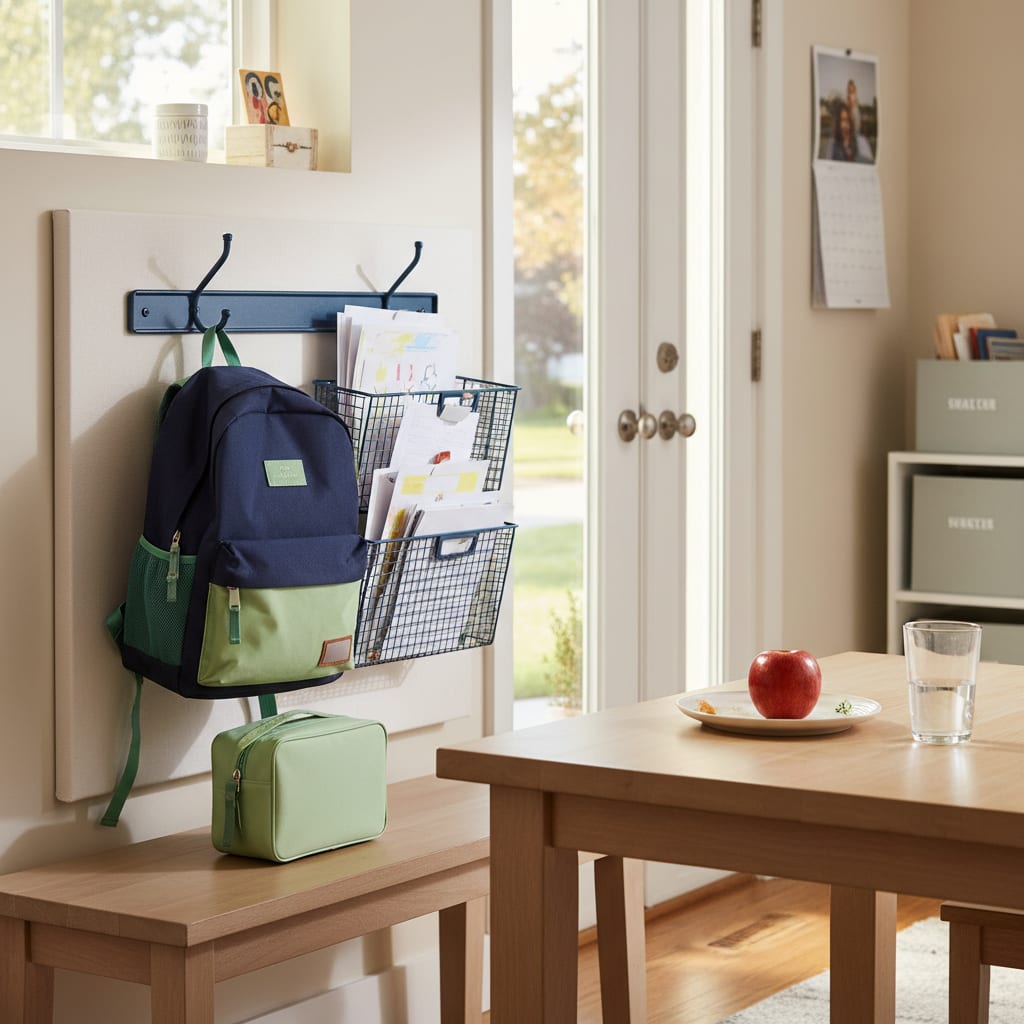
| 3:00 | Monday staged: bags, clothes, borrowed costume pieces | Daylight, not 8:15 p.m. |
| 4:00 | A ten-minute calendar meeting | Monday is not the day to find the field-trip form |
| 5:30 | An early dinner, candy with it | The AAP suggests eating earlier, not close to bed |
| Usual bedtime | Lights out on the new clock | Holding the time is what lands Monday |
The 4:00 slot is the Sunday family meeting cut to two parts: what is on this week, and who drives what.
If your four-year-old is fading at 6:45, an early bedtime for that child is fine; the older kids hold the usual time. Moving a small child’s nap and bedtime across a clock change is covered in the clock-change and school-week post.
The candy plan: one box, one slot, one end date
The AAP’s Halloween page is short and right: “Try to ration treats for the days and weeks after Halloween. Keep candy rules realistic, consistent and positive. Make a plan together so everyone knows what to expect.”
One box per child. Everything that passes the sort goes into a clear lidded box on a kitchen shelf, never a bedroom. A stackable box like the iDesign hinged-lid storage box lets a child see their haul without carrying it around.
One slot a day. The American Dental Association’s Halloween survival guide puts candy “with meals (or right afterward)”, because the extra saliva of a full meal helps rinse away leftover candy and the acids bacteria produce, and it warns that frequent snacking raises cavity risk. So the rule is a time, not a count: candy comes with lunch or after dinner, never between meals. Nobody can argue with lunch.
One end date. Pick a day and put it on the family calendar. When it arrives, whatever is left leaves the house. The ADA suggests that families “pick their favorites and donate the rest”, and names Operation Gratitude, which sends candy to troops overseas. If your school or your dentist’s office is collecting, that works too.
Which candy each child keeps is a food decision, not a schedule one. Two things to know at the sort: the ADA singles out sticky, gummy and sour candies as the hardest on teeth, and the AAP’s sort-and-check matters most for any child with a food allergy.
Is it the sugar keeping them up?
Probably not mainly, though children differ. The Academy of Nutrition and Dietetics says a substantial body of research shows no link between sugar and hyperactivity. It adds that a child “may be wired because of the excitement”, and that children with ADHD may be more sensitive to sugar.
Sunday’s meltdown is more likely the short night. Betteroo’s pediatrician-reviewed guide to kids’ sleep needs points out that short sleep often looks like hyperactivity, meltdowns or trouble focusing rather than yawning. The fix is the bedtime, not a candy ban. The AAP’s food-and-sleep point is about timing: its time-change article suggests dinner earlier, “since eating too close to bedtime can cause indigestion and make it hard to sleep”. Hence dinner at 5:30, with the candy.
Monday, November 2: the first school morning on the new clock
Monday is easier for the big kids than it looks: after the fall change, the bell feels an hour later to their bodies. The child up too early is the youngest, in our house the four-year-old who rides along on drop-off.
- Run the normal morning. The school morning routine runs as usual, and Sunday’s staging means the bags are already at the door.
- Give the youngest a signal that isn’t a number. A child who wakes at what now reads 5:50 needs to know whether it is time to get up. Betteroo’s guide explains how a color-changing toddler clock works: it shows one color for stay-in-bed and another at the wake time you set. If you use one, like the Hatch sound machine and night light, check it after the clocks change.
- Candy in the lunchbox follows the school’s rules, not the house’s. Check the school’s lunch policy before a piece goes in.
 One late night, one clock change. Back on schedule by Monday.
Betteroo builds a personalized, day-by-day sleep plan for children from newborn through age 6, so the youngest's bedtime lands back in place after a big weekend.
Take the free sleep quiz →
How long to watch it: the AAP’s article says “kids usually adjust within about a week” after a time change, and to talk with your pediatrician if problems continue.
FAQ
Should kids sleep in the day after Halloween? Let them if they will, but most young children won’t: after the fall change their usual wake time reads an hour early. Keep meals and bedtime on the new clock anyway.
How long should Halloween candy last? The AAP suggests rationing treats “for the days and weeks after Halloween” without setting a number. Pick an end date together and donate what’s left.
Does Halloween candy keep kids up at night? Research largely doesn’t link sugar to hyperactivity, though some children may be more sensitive. The late night and the clock change are likelier culprits.
What time do the clocks change after Halloween 2026? At 2 a.m. on Sunday, November 1, 2026, local time goes back to 1 a.m., per NIST. Hawaii and Arizona (except the Navajo Nation reservation) don’t observe daylight saving time.