The 5pm Car Nap That Ruins Bedtime: Fix the Pickup Run
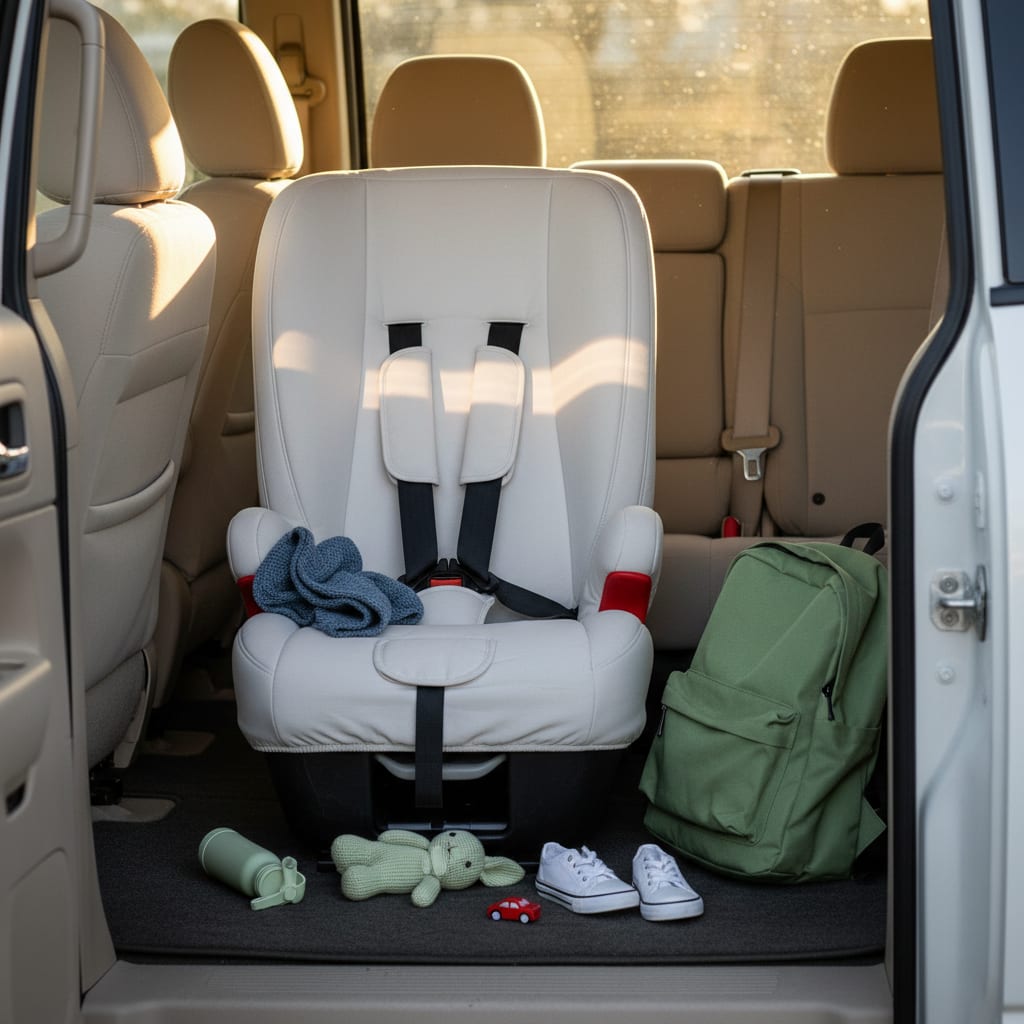
If your youngest goes under for twenty minutes on the way home from the elementary pickup line and is still negotiating at 9:05, you don’t have a bedtime problem. You have a routing problem. That doze sits at the worst possible spot in the day: late enough to spend the drowsiness that was going to put him down at 7:30, short enough to replace none of it. So the fix isn’t a better wind-down. It’s restructuring the run — when you leave, how long the drive is, and what the car is like while you’re in it.
Twenty minutes at 4:52 costs you ninety at 8:00
Here’s the trade you’re unknowingly making. All afternoon a small person accumulates the pressure that makes bedtime work. A warm car at 4:52 spends a chunk of it in one go — and hands you back a kid who is refreshed enough to fight and nowhere near rested enough to skip a real bedtime. Lights-out slides to 8:45 or 9:00, the whole evening compresses behind it, and the next morning’s 6:50 wake-up doesn’t move an inch.
Why that trade is so lopsided is nap-rhythm territory, and it isn’t mine. Casey at One Mom’s Guide writes about it properly — whether you’re actually watching a nap dropped too soon or a nap that’s genuinely finishing and needs quiet time in its place. If you’re not sure which one you’ve got, start there. What I can tell you is what the school-run calendar is doing to it, because that part is pure logistics — and in most suburban houses it’s the actual culprit.
The car isn’t beating you. The schedule handed it the win.
Look at the conditions you personally create every weekday at 4:40, then ask whether you’d fall asleep too.
The car is warm. The light through the back window is low and flat. The engine hums at one pitch. You’ve asked the child to sit still and be quiet, because you’re merging. He last had anything resembling rest around 1:00, and the whole second half of the afternoon has run on someone else’s schedule.
Then add the piece nobody says out loud: the length of the run is a choice you made once and never revisited. Ours was fourteen minutes each way because I liked the route. Fourteen minutes is exactly enough. Eight minutes is not.
Here’s what the same afternoon looks like before and after we rebuilt it:
| Time | The version that broke bedtime | The version that works |
|---|---|---|
| 2:40 | Wake the youngest to leave | Rest block ends on its own at 2:30 |
| 2:50 | Load up, drive to school early, idle in line | Leave at 3:05, arrive as the line moves |
| 3:20 | Bell; long slow crawl out of the lot | Bell; out of the lot in four minutes |
| 3:35–4:50 | Errand, then the long way home | Straight home, snack on the counter |
| 4:52 | Asleep in the car seat | Awake, cranky, upright, home |
| 7:30 | Bedtime attempt #1 | Lights out |
| 9:05 | Still going | — |
Nothing in the right-hand column is a sleep technique. It’s departure times and route length.
Five ways to restructure the run
1. Move the rest block earlier, and make it real
The car wins because it’s the only offer on the table. If the youngest’s quiet block ended at 1:30 instead of being cut short at 2:40 for the drive, the car at 4:52 is a much weaker pitch. Defending that slot from the school run is the same fight as protecting a midday nap against a 2:50 departure — the bell schedule and the nap schedule were written by institutions that have never met.
2. Trade the run on the days it matters
The cleanest fix costs nothing and isn’t about sleep at all: don’t be in the car. A carpool arrangement exists precisely so that one adult drives four kids instead of four adults driving four kids, and “I have a kid who falls asleep in the back seat” is one of the easiest trades to make on a street. Take two extra kids Tuesday and Thursday; keep your Monday, Wednesday and Friday afternoons at home.
3. Shorten the exposure, not the distance
You usually can’t move the school. You can almost always cut the minutes in the seat. Leave later and roll into a moving line instead of idling in a stationary one with the heat on. Park and walk to the gate if the school allows it — upright, outdoors and talking is the exact opposite of the car’s pitch. And cut the after-pickup errand loop on days you can’t afford the doze; a 4:10 grocery stop is the drive that buys you a 9:00 bedtime.
4. Make the back seat a worse place to sleep
Cool air on, radio off, back window shade up rather than down, and a job that requires talking — count the red mailboxes, name what we’re having for dinner, tell me one thing that happened at recess. Not a screen: a screen is quiet, warm, and dim, which is the whole problem wearing a different hat. Everyone stays properly buckled in the back exactly as always; the only things changing are the temperature, the light and the conversation.
5. Hold the evening’s clock, whatever happened in the car
If the doze happened, it happened. Don’t extend it, don’t move dinner, don’t push lights-out to “let him get tired again.” Run the normal school-night sequence at the normal times and accept a rough forty minutes. Bedtime that drifts to match the car is how a one-day problem becomes September’s baseline.
What I stopped doing
Three things I tried first, all of which made it worse.
Waking him at the light. A kid startled out of a doze at 4:56 is worse company for the next three hours than one who got the whole twenty minutes. If it’s happening, let it finish and salvage the evening instead.
Skipping the rest block entirely to “bank tiredness.” This produced a child who fell asleep faster in the car, at 4:35 instead of 4:52. Sleep pressure with nowhere legitimate to go finds the car seat.
Renegotiating bedtime nightly. Once lights-out becomes a function of what happened in traffic, you’re not running a routine. You’re running a daily hearing, and the after-school landing sequence unravels backwards from there.
One honest limit: everything above is scheduling. Whether the underlying nap is the right length for your kid’s age — or whether it’s on its way out entirely — isn’t something a calendar can answer. Betteroo’s breakdown of how long a nap should actually run at each age is the number I’d check first, and if you suspect you’re at the end of the road, the point where kids finish napping altogether will tell you whether to restructure the run or retire the nap.

FAQ: car naps and the school pickup run
Why does a short car nap ruin bedtime?
Because it lands in the late afternoon and spends the drowsiness that was going to carry your child to sleep at 7:30, without being long enough to count as rest. You get a refreshed, un-rested kid and a bedtime that slides an hour or more — while the next morning’s wake-up doesn’t move at all.
How do I stop my child falling asleep in the car after school?
Change the conditions rather than the child: cool air, no screen, window shade up, and a task that requires talking. Then shorten the time in the seat — leave later so you roll into a moving pickup line, drive straight home, and move errands off the after-pickup loop on days you can’t afford the doze.
Should I wake a child who falls asleep on the way home?
In our house, no. A kid startled awake four minutes in is harder company all evening than one who sleeps the full twenty. Once it’s started, let it finish and protect the evening’s clock instead — same dinner time, same wind-down, same lights-out, and expect a hard forty minutes.
Should I move bedtime later after an afternoon car nap?
No. Hold the normal time even on the nights it’s clearly going to be a fight. A bedtime that adjusts to whatever happened in traffic stops being a fixed point in the day, and within about two weeks the whole evening routine is renegotiated nightly instead of simply running.