Bedtime After a Long Car Ride: Why It Falls Apart
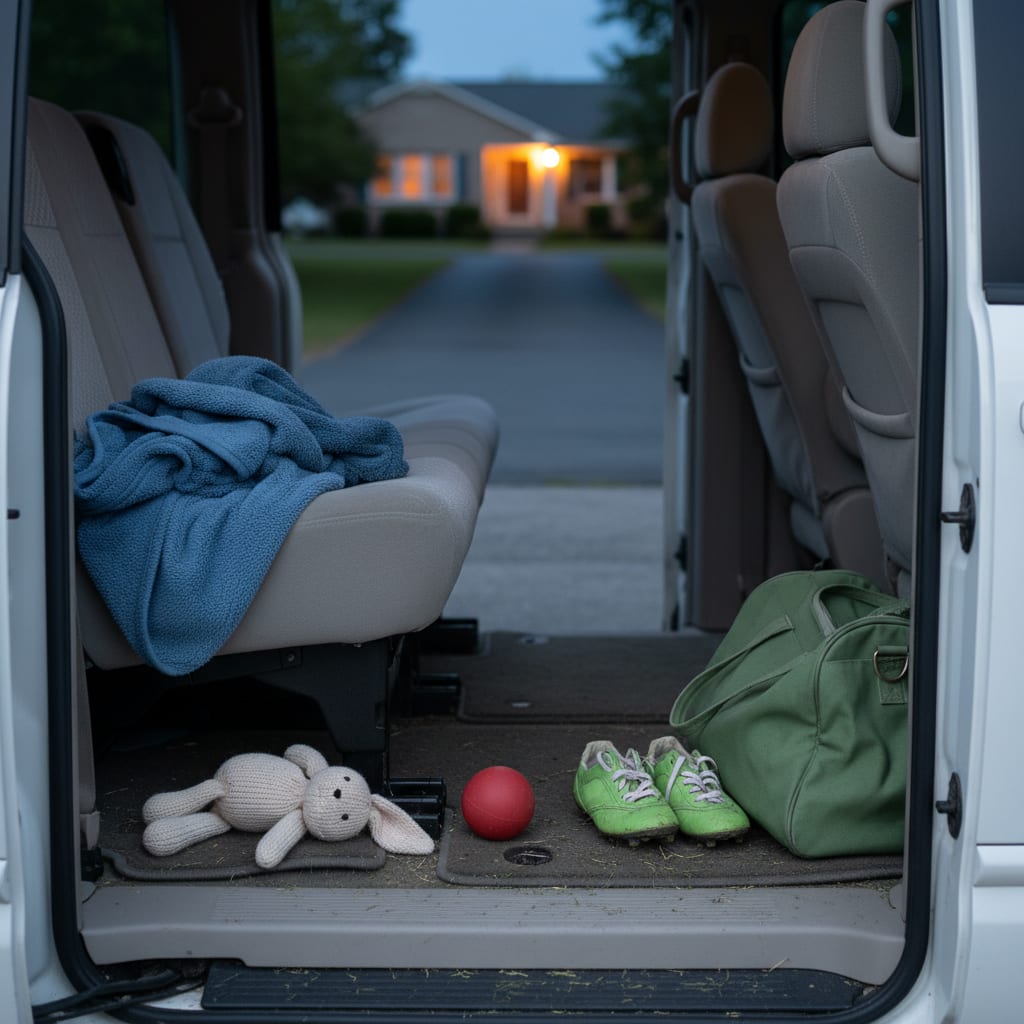
A long car day doesn’t wear a four-year-old out. It deletes the four things bedtime was standing on: the nap turns into a twenty-minute doze at the wrong hour, dinner slides an hour late, the last stretch of the drive is bright and loud instead of quiet, and you walk in at 7:52 with the whole sequence still to run. Fix the shape of the day and bedtime mostly fixes itself — decide the wheels-roll-home time in the morning, keep the last stretch awake and dim, and hold tomorrow’s wake time whatever happened.
It isn’t the driving. It’s the four things the driving deleted.
I spent two seasons blaming the car. Away game two towns over, ninety minutes each way, and the youngest — who goes down at 7:45 on an ordinary Tuesday without a word — spends until 9:20 doing laps of the hallway.
The drive isn’t really the variable, though. Four things are, and each is a schedule item you can move:
- The rest block became a doze — twenty minutes at the wrong hour, at the wrong end of the day. Not the same thing.
- The food clock slid. Lunch at 11:30 because the game was at 1:00, then nothing substantial until a stop at 6:40. A child eating a real meal ninety minutes before lights-out is not settling at lights-out.
- The last hour was input, not wind-down. Low sun through the window, a sibling’s tablet, the radio, three conversations. On an ordinary evening that hour is deliberately boring; on away days it’s the loudest of the day.
- The arrival ate the sequence. Home at 7:52 means bath, teeth, story and lights-out are all still ahead of you when they should be behind you.
None of that is about mileage. All four are times, which means all four are yours.
The away-day evening, read off the clock
Know what each arrival time buys you. The table I keep in my head all Saturday:
| Wheels stop in the driveway | What’s still possible | The call |
|---|---|---|
| By 5:45 | Everything, unhurried | Ordinary night at the ordinary time |
| 6:15–6:45 | Full sequence, briskly | Run every step, just shorter |
| 7:00–7:30 | The sequence only, nothing extra | Skip the bath, keep the order, same lights-out |
| After 7:45 | Almost nothing | Shortest version that still has every step, no negotiating |
Yours will differ by an hour either way. The point is that the call gets made at 4:00 in a parking lot, not at 7:52 in a hallway with a coat still on.
Decide the wheels-roll time before you leave the driveway
This is the whole lever, and it costs nothing. On away days we set the leaving-there time in the morning, out loud, before anyone gets in the car: wheels roll at 4:30. Treated like a practice start — not an intention, a time. It survives the third overtime, the team photo, and the parent who wants to debrief the season.
Because the drive home isn’t the part that runs long. The forty minutes in the parking lot after the drive was supposed to start — that’s the part. Highway time is a fixed cost; the goodbye is the variable one, and the only place in the day where you can recover an hour. Set it in the morning and you’ll defend it. Decide it at 4:15 and you’ll lose it.
The doze in the back seat is a debt — the rate depends on when you take it
Some sleep will happen in that car. What matters is which half of the drive it happens in.
Twenty minutes right after you pull out is a rest block landing near the hour a rest belongs. Twenty minutes in the last stretch, forty minutes from home, spends the exact sleep pressure lights-out was going to run on — and you pay for it between 8:00 and 9:30. Same mechanism as the 5pm pickup-run trap, at a bigger scale, and it’s why two identical away days produce completely different evenings.
So structure the drive rather than the child:
- Leave earlier than you want to. A 4:30 departure puts the sleepy stretch at 4:45 and the last stretch awake. A 5:40 departure puts it at 6:50 — the worst possible hour.
- Take the stop at the front. Bathroom, fuel, anything: do it early. A stop in the last forty minutes wakes a child who’d have stayed asleep and hands you a wide-awake passenger at the door.
- Turn the last stretch dim and dull. Visor down, screens away, one quiet conversation or nothing — not to force anyone awake, but so the drive resembles the wind-down about to happen indoors. And whatever happened back there, the sequence still starts on arrival and lights-out stays put.
Eating in the car is its own puzzle, and heymomblog is better on the food half than I am. My half is the timing: the meal lands before 6:30 or it lands small — a full dinner at 7:10 is a bedtime problem wearing a napkin.
Why the fight is bigger, not just later
What surprised me the first year: on car days the youngest didn’t go down later so much as harder. More laps, more requests, more distress — and a child who missed sleep ought to settle easier, not louder.
That’s only backwards if you assume tiredness is a dial. It isn’t. A small child pushed well past the window they should have slept in gets a second wind rather than a slow fade, which is why an overtired child fights sleep instead of falling into it. I run a calendar; the physiology isn’t my department. But knowing the direction of it changed what I did at 8:40 — I stopped treating the resistance as a behavior problem to out-stubborn, and started reading it as the receipt for a 6:50 doze.
You can plan the drive. Plan the sleep it lands on, too. Betteroo builds a personalized, day-by-day sleep plan for your baby or toddler — where the nap should land and when bedtime should follow — so one long Saturday doesn't cost you the week. Take the 2-minute sleep quiz →Sunday morning is where the bill actually arrives
The 9:20 bedtime is what you notice. What costs you is the next morning: a night that started late and badly often ends early — up at 5:40, wrecked, with a whole day ahead. If that’s familiar, it’s worth reading why a short, fought night so often produces an early waking rather than a lie-in, because the instinctive fix — letting them sleep in — is usually the thing that extends it.
My rule, unpopular in this house: the wake time doesn’t move. Up at the ordinary time, out into the light, ordinary breakfast, early rest block, early bedtime that night. One bad evening stays one bad evening. Slide the wake time to compensate and you’ve turned a Saturday into a Tuesday — the version that collides with the school-night sequence and a 7:40 departure.
Two things we changed about away days
- The youngest’s clock decides which tournaments we stay for all of. Some Saturdays we take two games and drive home; the full-day load-out belongs to days that can absorb it. Overnight tournaments are a different animal, and thetravelmommy handles those better than I do.
- We stopped grading the evening. Home at 7:52 gets the short sequence at the usual time — no discussion, no consequence, no deciding at 8:50 to make a point about it.
FAQ: long drives and bedtime
Why does my child fight sleep after a long car ride?
Usually because the drive swapped a proper rest block for a short doze at the wrong hour, pushed food late, and delivered an hour of stimulation where the wind-down belonged. They arrive home past the window they settle easily in — and past it, resistance goes up, not down.
Should I let my toddler sleep in the car on the way home?
If it happens early in the drive, let it — it lands near the hour a rest would have. If it starts in the last stretch before home, it spends the sleep pressure bedtime needs. The fix is leaving earlier, not waking a sleeping child at a stoplight.
What time should we leave to get home before bedtime?
Work backwards from lights-out: drive time, plus twenty minutes of friction, plus your shortest bedtime sequence. Set departure at that total before lights-out, and say it out loud in the morning — the parking lot is where the hour disappears.
Should bedtime be later after a big travel day?
No — hold it. Pushing lights-out to match how awake they seem rewards the second wind and usually buys a worse night and an earlier waking. Run a shorter version of the same sequence, same order, same time, and don’t move the wake time.