A Summer Schedule for Kids That Isn't a Camp Brochure
A summer schedule for kids should run on blocks, not bells: five fixed anchors — wake window, morning outing, lunch, quiet hour, and bedtime — with wide-open space between them, plus a weekly rhythm that gives each day a flavor instead of an itinerary. That’s the whole architecture. School-age kids coming off ten months of bell schedules don’t need summer to replicate school, but they collapse without any structure — usually by the second week of June, usually at 4pm, usually on you. The anchors keep the family clock ticking; the space between them is where summer actually lives.
Why “no schedule” fails by mid-June
Every year some of us try freedom. Freedom’s results are reproducible: sleep drifts an hour, screens expand to fill all available territory like a gas, the 4pm bicker-hour arrives daily, and — the part nobody warns you about — the kids get grumpier, because unlimited choice is its own kind of work for an eight-year-old. Meanwhile the full camp-brochure summer, scheduled to the half hour, buys peace at the price of a August family that never once got bored enough to invent anything. The block schedule is the deliberate middle: enough skeleton that the day carries itself, enough slack that boredom gets to do its weird productive thing in the backyard with a hose.
The five anchors (ours, as a working example)
| Anchor | Our version |
|---|---|
| Wake window | Up by 8:00 — later than school, but a window, not a free-for-all |
| Morning outing | Out of the house by 9:30: pool, library, trail, someone’s yard |
| Lunch | 12:30, at the table, screens off |
| Quiet hour | 1:30–2:30, non-negotiable, every age (see below) |
| Bedtime | 30–45 minutes later than school-year, held all summer |
Quiet hour is the anchor parents skip and the one I’d defend with my life: the 4-year-old rests, the big kids read or build quietly in their rooms, and the adult in the house remembers she has a first name. It survives because it’s an anchor — same time daily, zero negotiation — rather than a punishment deployed when the volume peaks. And the empty space between anchors is genuinely empty: no rotation of enrichment stations, no craft-of-the-day I’d have to staff. The school-year clock is my managed masterpiece; summer’s clock is deliberately mostly slack.
The weekly rhythm: days with flavors
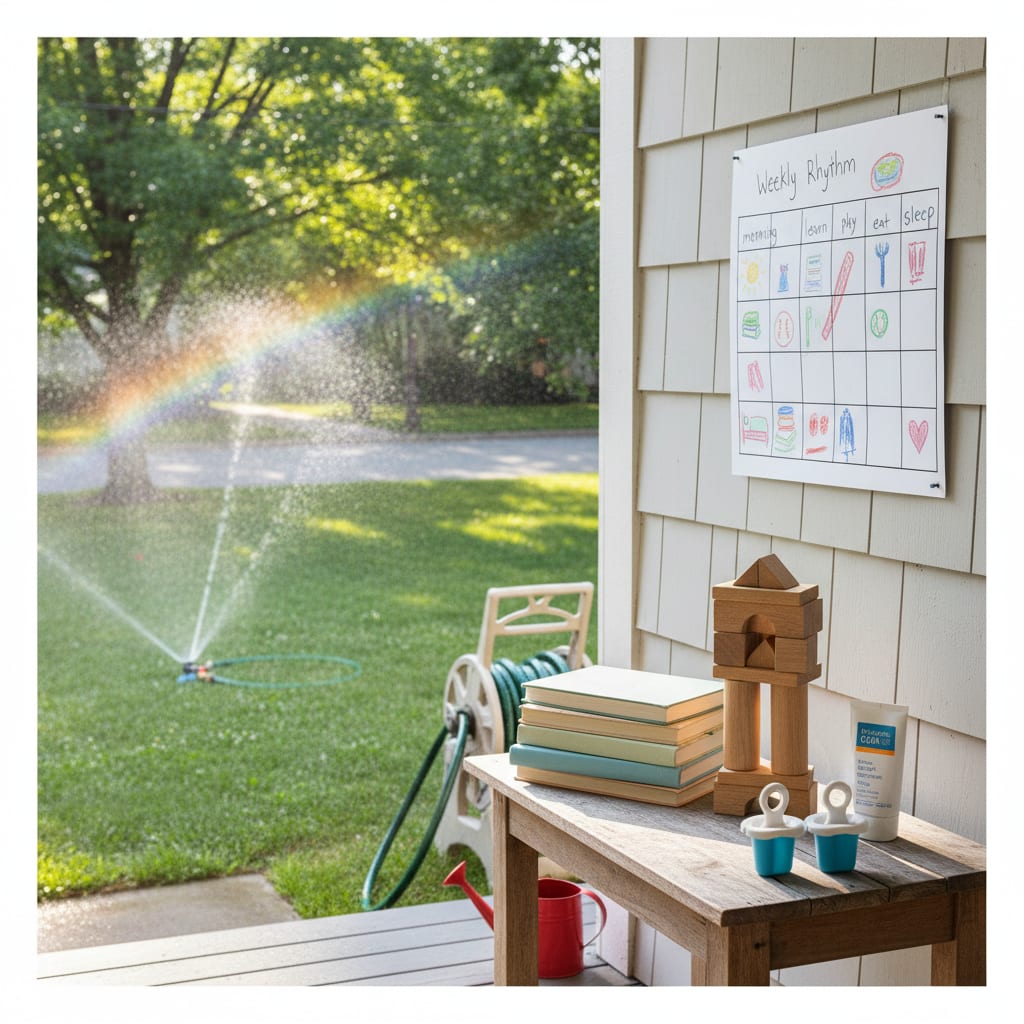
Layer two gives each weekday a theme loose enough to survive contact with real life: Monday pool, Tuesday library-and-errands, Wednesday friends over, Thursday adventure day (trail, creek, the free museum), Friday home day for the deep-blanket-fort projects. The flavors do three jobs: they answer “what are we doing today?” before it’s asked eleven times, they guarantee variety without daily planning, and they give the week back its shape — because a summer without weekdays turns into porridge for everyone, adults included. The rhythm goes up on the command-center wall on a single summer edition of our weekly run-sheet, written once in June, amended never.
Screens: a window, not a meter
The school-year screen fight is bad; the summer version, unmanaged, is a siege. The block schedule’s answer is a screen window — one fixed daily slot (ours: 3:00–4:30, the post-quiet-hour heat of the afternoon) instead of a running meter of earned minutes. Windows end arguments because they’re calendar facts, not judgment calls: nobody lobbies at 10am, because the answer isn’t “no,” it’s “at 3:00,” which is a different and much more peaceful sentence. Outside the window, devices live in the charging spot, not in pockets. That’s the entire policy, and it’s the least-enforced rule in our house precisely because it never varies.
Bedtime in July: the anchor under attack
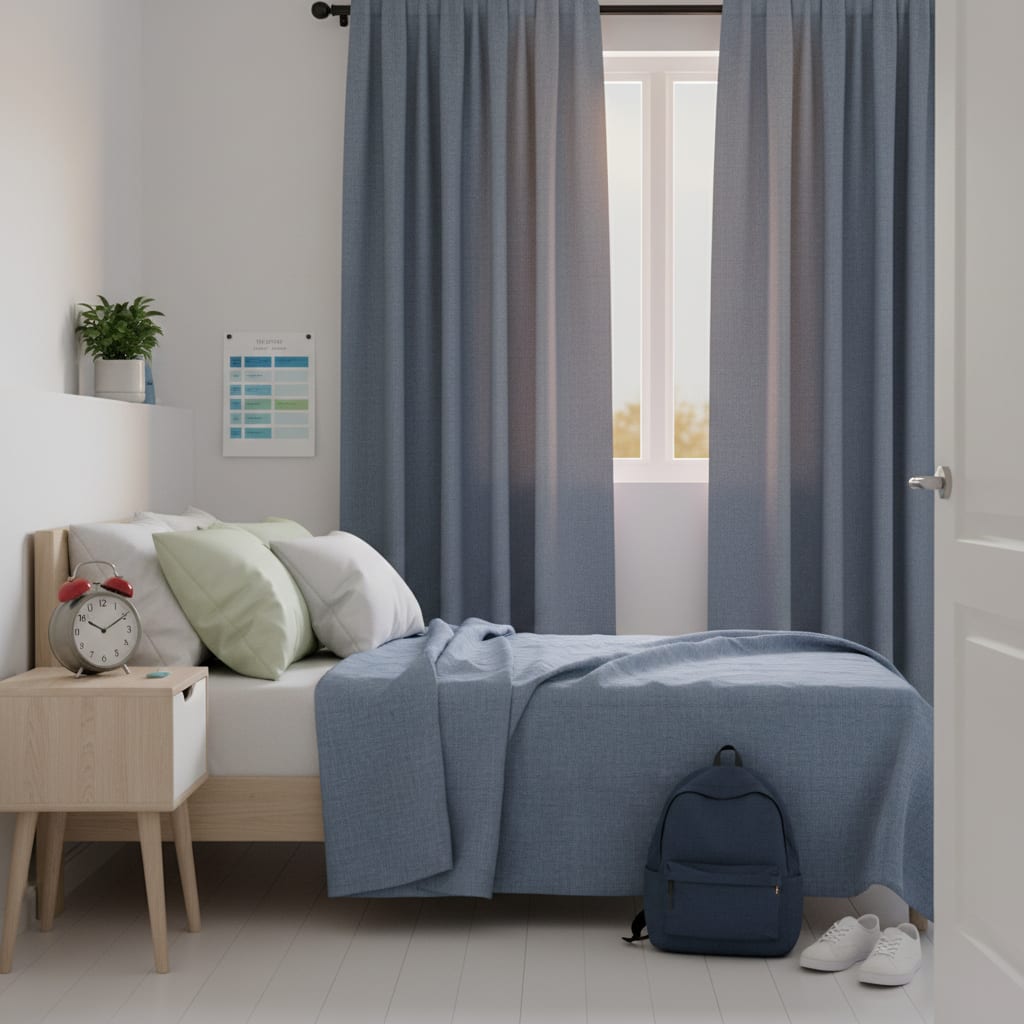
Summer bedtime deserves its own paragraph because it’s the anchor with the strongest natural enemies: no morning bell, golden light until 8:30, and a neighborhood still audibly playing through the window. We shift bedtimes later — 30 to 45 minutes — and then hold that line all summer, because sleep needs don’t take the season off, and because August-you inherits whatever July-you let drift. The youngest is the hard case: convincing a 4-year-old it’s night when it’s broad daylight out is negotiation above my pay grade, so blackout curtains do the arguing, and his sleep schedule runs on his Betteroo plan — the personalized program we’ve leaned on since his baby days — which adjusts his quiet-hour and bedtime call as the season shifts, so at least one of us is following an actual plan instead of the sunset. Big kids get the later slot plus reading-in-bed; everybody’s clock stays close enough to school-time that the August reset is a nudge, not a demolition.
FAQ: summer schedules
Should kids have a schedule in the summer?
A loose one, yes: fixed daily anchors (wake window, meals, quiet hour, bedtime) with unstructured space between. Full-freedom summers reliably produce sleep drift and screen sprawl by mid-June; the anchors prevent that without turning July into school.
What does a good summer daily schedule look like?
Morning energy out of the house early, lunch at a set time, a non-negotiable quiet hour after lunch, one fixed screen window in the afternoon, and a held bedtime. Between those five posts, the day is intentionally unprogrammed — boredom is a feature, not a failure.
How do I keep bedtime from sliding in summer?
Shift it later once — deliberately, by half an hour or so — then defend the new line with blackout curtains, the same wind-down sequence as the school year, and a screen window that closes well before bed. Drift happens by exception-creep, so the rule is boring consistency, not perfection.
Do summer schedules work for working parents?
Even better, honestly — camps and sitters slot into the anchor framework as the “morning outing” block, and the shared anchors (meals, quiet hour, screen window, bedtime) keep home days and camp days feeling like the same summer. Hand the sitter the run-sheet; that’s what it’s for.